Red Flag for Cardiac Disease

ED as a Precursor to Cardiac Disease

Erectile dysfunction is not a trivial symptom and not necessarily normal as men get older. This information for me is new and eye-opening.

After my recent heart issues, surgery and eventual recovery I have spent hours reading various medical articles in addition to my usual Wall Street Journal and New York Times early morning perusal of the newsy items presented there. During one of these excursions I tripped over (my phrase for it) an article about erectile dysfunction which is a topic of discussion every man gets during an annual physical with his primary care person.

In my case it is often phrased – Do you experience erectile dysfunction? And my answer often is – I am a 76 year old man, what do you think? I have often, maybe always, made a joke about it and the young female medical assistant who is filing in the standard questions required by the medical hierarchy laughs along with me.

A few days ago I discovered this gem from the Mayo Clinic. https://www.mayoclinic.org/medical-professionals/urology/news/erectile-dysfunction-a-vital-sign-for-cardiovascular-health/mac-20585074

The 2023 Princeton IV (P4) consensus guidelines bring a game-changing message to clinicians: Erectile dysfunction (ED) is not just a quality-of-life issue but also a red flag for cardiovascular disease (CVD). This multidisciplinary expert panel urges healthcare professionals to view ED as a risk-enhancing marker for silent coronary artery disease (CAD), especially in younger men who appear otherwise healthy. The consensus guidelines were published in a 2024 issue of The Journal of Sexual Medicine.

More: Why ED deserves serious attention

ED often occurs 2 to 5 years before men experience heart attacks. Because the penile arteries are only 1 to 2 mm wide, they’re among the first vessels to show signs of atherosclerosis. In many cases, ED is the earliest — and only — visible symptom of cardiovascular disease.

Wow. Had I an inkling of this connection I would have asked for a cardiac stress test. Or maybe this test referred to next.

The P4 panel recommendations confirm that ED is a strong, independent predictor of cardiac events, even when traditional risk factors such as cholesterol, diabetes and blood pressure are controlled for. In short, ED is the body’s “check engine light” for heart disease.

New guidelines: Reassess risk with better tools

Dr. Kohler and the P4 team advocate using coronary artery calcium (CAC) scoring in patients with ED and borderline (5% to 7.5%) or intermediate (7.5% to 20%) 10-year atherosclerotic CVD risk. This quick, noninvasive CT scan is one of the most sensitive and specific ways to detect subclinical CAD, especially in patients ages 40 to 60, whose risk is often underestimated.

Finding a high CAC score (above 100) can lead to early intervention: statins, aspirin, lifestyle counseling and, in some cases, cardiology referral. This single test can turn a routine men’s health visit into a lifesaving diagnosis.

Too late for me. I found my blockage while riding on my favorite bike trail. I could have found it before that day. I’m complaining about not figuring it out sooner. And perhaps my own complacency is complicit here. PCPs only see their patients once or twice a year and it is up to the patient to discuss the things that are not working correctly. (Men generally are shy about discussing their reproductive equipment. I am no exception.)

Both of my parents had heart problems. Mom had bypass graft surgery in her mid-seventies and lived to be 95.

I miss her whenever I throw away a cardboard box.

Carpe Diem.

Flights to Portland

After talking to my sister for awhile this morning I fell down the rabbit hole of – How much money to fly two people to Oregon in August? Leaving out the thought of what jet fuel might cost the airlines three months hence I searched the four airlines sites that I usually search before locking down flights to the Pacific Northwest from the Rust Belt in mid to late summer.

It looks like $750 – $800 round trip for the seat I want to sit in for four to five hours. Frontier is still searching. Their website has a cute little circle of death whirly twirly thing going with a brown bear in the middle. They are headquartered in Denver. Their website is afraid to say, “No Flights on those dates”.

Today’s activity will be to see if the Frontier site ever responds to my request. So far it has been 20+ minutes. Expedia responded within seconds. They must own all of the effective coders.

These things, like website efficacy interest me.

In the world of used cars – don’t let the guy who wants to buy something off of the lot get away before making a deal.

I quit waiting for Frontier to get back to me.

Carpe Diem

Scrapbooks and Journaling, Taking Note

Scrapbooks

I save little snippets, tickets and programs, thinking one day I will create a scrapbook of several of the things that I have done in my life. Why do I do this and why do I never get started? These thoughts jumped into my head as I was sorting through the detritus of pill bottles and the paper that comes with them and reloading my weekly pill box.

This could be a scrapbook, I said to myself as I looked at my cardiac logbook/diary from Mercy Health. I brought this book with me to my last follow-up visit with the cardio-thoracic surgery folks and the NP that I saw that day remarked that people rarely bring the book with them to the doctor. It plainly states to bring this log to the post op visits. Do people not read well?

Do I want a scrapbook of my heart attack? This binder collects everything in one spot. BPs, heart rate, exercise (I lied a little), how many times I blew into the lung gizmo and how many times I sucked on the other lung gizmo. A book that I could open a few years hence and reminisce. Do people do that? Do I want to do that?

Jake the exercise guy came today dismiss me from the follow up exercise program that came with my CABG surgery five weeks ago. He asked me to do a few specific exercises to assess my recovery and during that activity I noticed a small book sticking out from behind my IKEA bookcase I bought several years ago. After the exercise I pulled it from behind the shelves and discovered it was a small photo album that I had purchased for Cheryl many years ago. She had placed in it photographs of the grand children. She did this at the beginning of her dementia years to remember who they were as small children. They were pictures that she liked. As her mind deteriorated she added a few other notes and an obituary of some unknown (to me) person carefully trimmed from the newspaper. She had created a sort of scrapbook.

Now that I have discovered it and recovered it from its hiding place, I will return it to the collection of similar items that I separated from the other random assemblies in her office when she went to stay in memory care.

The small booklet and exercise papers and Jake’s dismissal paper and the Mercy Health binder and log that I meticulously kept up and later discovered the material was dated and they needed to update, I put together on a shelf (and called it macaroni like Yankee doodle). Perhaps one day hence I will look through it all and reminisce. But I suspect not.

Like the closet full of old checks and check statements I think that in a few years I will skim over it and recycle it into the nearest trash receptacle. I will be able to look in the bathroom mirror at my scar and reminisce.

The little picture album with random notes will await my return in the tub of family memories.

Carpe Scrapbook Diem.

Back To Baking

More Bread Recipes

Recovery gives me a lot of time to think about breads and cooking. It occurs to me that I am more recovered from this heart thing than I realize. I spend more time reading recipes. I have more interest in doing that and making those. It occurs to me that I am once again focused on living.

Changes in attitude are small and subtle.

Interest in in other things beyond yourself and what you feel leads to renewed interest in life.

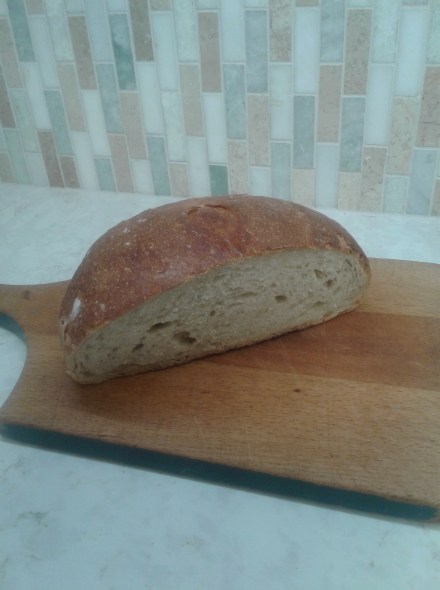
Two breads: Same Recipe, Different Technique

4-Ingredient Homemade Bread

Only FOUR ingredients! Anyone can make this crusty, bakery-style bread at home. I’m sharing this recipe in exchange for a simple “Yum” — Recipe in First Comment → as you can tell from this text I spent a great deal of empty time cruising through Facebook and YouTube. Both of the next recipes are in the category of what I think of as psuedo-sourdough. Yeast spores exist everywhere. When I get excited in winter to make sourdough I start with whole wheat flour (usually Bob’s Red Mill or King Arthur).

Ingredients

• 3 cups all-purpose flour

• 1½ cups warm water

• 1 tsp salt

• ½ tsp instant yeast (a small amount of yeast, so it will take awhile)

Directions

1. In a bowl, mix flour, salt, and yeast.

2. Add warm water and stir until a sticky dough forms.

3. Cover and let rest 8–12 hours (or overnight – awhile).

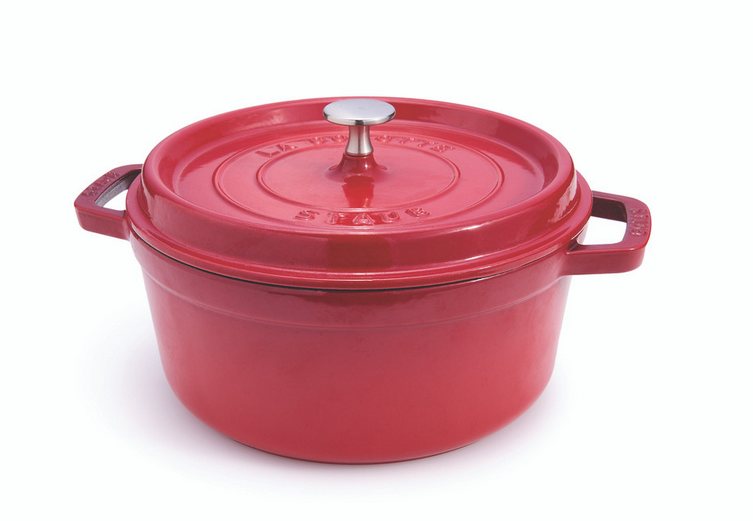
4. Preheat oven to 450°F (230°C) with a covered Dutch oven inside.

5. Carefully place dough into the hot pot, cover, and bake 30 minutes.

6. Remove lid and bake 10–15 minutes until golden and crusty.

7. Cool slightly, slice, and enjoy!

Crispy outside, soft inside—no kneading, no stress, perfect every time.– The Facebook comment and it works.

Another…

  • 1 ½ cups warm water
  • 1 tsp yeast
  • 1 tsp sugar
  • 3 cups plain (all purpose) flour
  • 1 tsp salt

1. In the warm water, add your yeast and sugar and stir let it sit for 5 to 10 minutes until foamy (like me this chef likes to proof the yeast in sugar water. Carbs are carbs – I often use a small amount of flour.)

2. Put 3 cups of plain (all purpose) flour in a big bowl. Add one teaspoon of salt and mix. Add your yeast mixture and mix together. Should look like a shaggy mess. Let rest 30 minutes covered

3. Do the stretch and fold clockwise four times turning the dough as you do this, let it sit for 30 minutes and repeat three more times

4. Put the bread in the fridge and let it rest overnight

5. Take the bread out and let it sit to room temperature about one to 2 hours

6. Preheat your oven at 230°C, putting in your pot, which you will cook the bread in. Should (must) have a lid.

7. Put your dough on a flowered bench top and do one last stretch and fold then put it in a bowl with baking paper in it, and let it sit for two hours till it doubles in size (reverse 6 & 7 – my oven does not require 2 hours to heat up.)

8. Put it in your pot score the top of your dough and pop the lid on and into the oven for 30 minutes then take your lid off and cook for another 20 minutes

9. Let bread rest for 10 minutes before devouring – bread is best warm and directly from the oven.

The first reel I watched on Facebook was from a gentleman who measured everything in grams. 500g of flour, 400g of water. He insisted this was best. On my scale 500g of flour is 3 cups of it – maybe a smidge more depending on how it settles in the measuring cup. And 400g of water is 400ml which is a bit more than 1 ½ cups of water, more like 1.69 but close enough as they say.

This recipe has no oil or butter or any other fat which to me merely means you need to use it within 48 hours of baking it. It can be frozen for a couple of days but it becomes croutons pretty quickly.

The whole process is sped up by using the normal amount of yeast for this volume of flour which is about 2 ¼ teaspoons and using bottled water instead of tap water. This is a pretty basic recipe and is referred to as Pain Ordinaire in my bread book. The french knead their bread.

The lid traps much of the moisture in the loaf.

Carpe Diem.