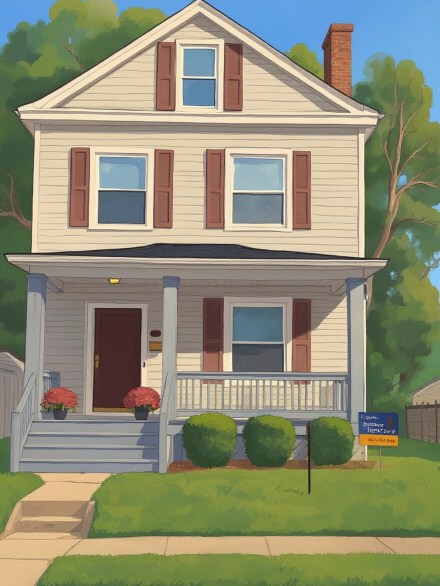
One of Debbie’s favorite activities is to look at houses for sale. She sends me a link from the real estate broker site and refers to it as the house of the day. I tend to find it on Google maps and sometimes look on the county auditor’s site to examine its history both pricewise and ownership.
One little house we examined became a writing prompt and the following story came out.
Porter and Fannie
Porter and Fannie met in the summer of 1980. There was a neighborhood party that welcomed Porter to the neighborhood and celebrated July 4th.
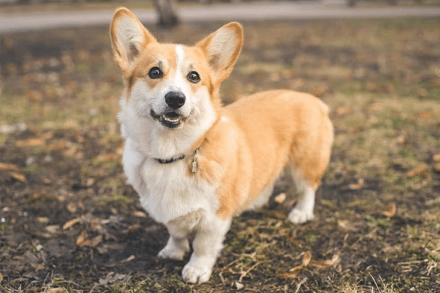
Porter was a common sight shortly after he moved in to the apartment building down the block from Fannie. He had a well mannered corgi that he walked twice a day once in the early morning before going to work and once, sometimes twice, after dinner, both his own and Marshall’s. Marshall was the name of the corgi. Its full name was Howdy Marshall which was what Porter said when he found him wandering in his old neighborhood.
Marshall was so well mannered and friendly Porter was certain that his owner was nearby. That started a thorough but unfruitful search for its owner. No one near where Porter lived at the time recognized Marshall.
Porter was a walker and a sometimes jogger. That day he was walking and enjoying the January sun. Marshall appeared from behind some bushes in a nearby front yard wearing a collar with a star shaped badge that had no identifying information so Porter assumed the dog belonged to the house. Marshall reinforced that by following him up the steps and sitting beside him as he pressed the doorbell.
“Good morning! Just walking by and I think your corgi has gotten out.”, he said to the young woman who answered the door. Marshall sat happily nearby with a big dog smile and his tongue hanging sideways.
“Nope. Not mine. He’s cute though. I don’t think he belongs to anyone around here. I’ve never seen him before.”, she replied. “I’m Tammy, by the way.”
“Porter”, he replied. “No one that you know of has a corgi?”
“No. Sorry.”
“Well, I guess I’ll keep looking. Thanks for your help.” Porter turned to go and Marshall followed him.
“I know you want to be here but I can’t keep you. No dogs where I live. I’m not sure I can have a pet. And why aren’t you wearing any ID?”, he said to the dog. Some of this was vocally and some of this conversation was mental but as he knelt down to examine the corgi more closely he realized that Marshall was injured on his hind quarters. “Did some one snatch you and you got away? Does that hurt?” He reached out to pet the dog and examine his injury. The little animal stood patiently while Porter did his examination. Porter picked the dog up and crossed the street towards the block that his building was on.
When he got home he tracked down a nearby vet and found that he could take Marshall there that afternoon.
Marshall’s injuries where minor. The vet remarked that the injury to it rear leg could have easily happened when the dog was shoved out of a car door. And after listening to Porter’s story about how he came to be in possession of the dog he remarked, “No charge.” Porter left with Marshall happily wagging his tail. The vet had given him no shots.
Porter spent the next few weeks posting printed notices and placing the same information on Facebook and other social media platforms to no avail. Perhaps the vet was right. Some one had tossed Marshall from a car when they were done taking care of him. Who could have done such a thing? Marshall, Porter was by this time calling the dog Marshall and the dog would alert to that name when Porter said it out loud, for his part acted as though he had found his master back. Lots of tail wagging and excited play demonstrated this behavior daily to Porter.
Porter had not owned a dog before and had not even considered it but something in him now extended an attachment and connection to this creature smaller than him. His landlord, when Porter inquired, told him that dogs where not allowed but that he could temporarily house the dog while he sought out the true owner. As it became more and more apparent that Marshall was a castaway, Porter started looking for a new place to be with the corgi.
He found an apartment in a building in a neighborhood with which he was unfamiliar. This area was closer to his office and fortuitously he could, if he chose, ride his bike to work. As he settled into his new situation he walked Marshall everywhere he could nearby. This neighborhood he usually drove his SUV through on the way to and from work. As he roamed with Marshall, he looked at the buildings and houses. He said hello and talked to the people.
There were several other neighbors with dogs. Marshall also made contact with much butt sniffing and sometimes friendly, sometimes unfriendly noises. These encounters consumed enough time that eventually Porter became known to the neighborhood and conversations beyond a hand wave were commonplace. Dog owners have a special bond and that camaraderie extends to other owners.
A few months after Porter had moved in, he passed by Fannie’s house. She was weeding her garden and Marshall gently crept up next to her to examine her activity. Porter was distracted by a phone call as he was walking the dog after work. Marshal had taken his extendable leash all the way to the end before Porter noticed. Porter almost tripped over it. Fannie petted Marshall.
“Aren’t you cute!” she said to Marshall. Marshall wagged his tail in response.
“His name is Marshall”, said Porter. “I am Porter. I hope he didn’t surprise you.”
“Howdy, Marshall!” said Fannie to the corgi. “I’m Fannie. It’s a great evening for a walk.” she said to Porter taking off her glove to shake hands.
“Howdy Marshall is his full name. It’s what I said to him when I found him walking in my old neighborhood.”
They chatted for awhile about dogs and flowers. Marshall politely stretched out the leash to get mostly out of site near a tree to defecate.
“I’m sorry about that.” Porter told Fannie as he stooped to recover Marshall’s business into a plastic bag he brought with him specifically for the purpose.
“It’s okay. The neighborhood dogs like that spot. Not everyone cleans up after their dog. Thank you for doing that.”
It was an early summer evening in late June. Fannie and Porter talked for almost an hour during that first encounter. When the neighborhood 4th of July celebration was announced by her neighbors she volunteered her backyard which was on the corner and the next time she saw Porter and Marshall, she invited him and Marshall to the party.
In the evening dusk of the 4th when the neighborhood children were agitating and nagging their Dads to start the fireworks show. Porter and Fannie drifted off the corner porch to watch the show. Marshall sat for a minute and looked at Porter. Eventually the corgi positioned himself under their side-by-side chairs and waited anxiously while watching several kids with sparklers. If corgis could speak he might say, “Keep those sparklers in the street!”
The universe put them together at just the right time.
Love bloomed at that party. Marshall had a home with humans. He was unafraid of the fireworks show. He felt safe and fell asleep.
Where does fiction come from? This little story just came out of my fingers thinking about Porter and Fannie. Their names are on the county auditor’s site as previous owners of the house that Debbie sent one morning.
Carpe Diem.