
More Bread Recipes
Recovery gives me a lot of time to think about breads and cooking. It occurs to me that I am more recovered from this heart thing than I realize. I spend more time reading recipes. I have more interest in doing that and making those. It occurs to me that I am once again focused on living.
Changes in attitude are small and subtle.
Interest in in other things beyond yourself and what you feel leads to renewed interest in life.
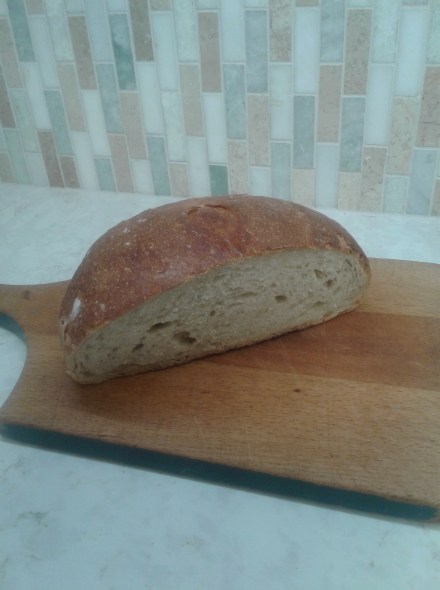
Two breads: Same Recipe, Different Technique
4-Ingredient Homemade Bread
Only FOUR ingredients! Anyone can make this crusty, bakery-style bread at home. I’m sharing this recipe in exchange for a simple “Yum” — Recipe in First Comment → as you can tell from this text I spent a great deal of empty time cruising through Facebook and YouTube. Both of the next recipes are in the category of what I think of as psuedo-sourdough. Yeast spores exist everywhere. When I get excited in winter to make sourdough I start with whole wheat flour (usually Bob’s Red Mill or King Arthur).
Ingredients
• 3 cups all-purpose flour
• 1½ cups warm water
• 1 tsp salt
• ½ tsp instant yeast (a small amount of yeast, so it will take awhile)
Directions
1. In a bowl, mix flour, salt, and yeast.
2. Add warm water and stir until a sticky dough forms.
3. Cover and let rest 8–12 hours (or overnight – awhile).
4. Preheat oven to 450°F (230°C) with a covered Dutch oven inside.
5. Carefully place dough into the hot pot, cover, and bake 30 minutes.
6. Remove lid and bake 10–15 minutes until golden and crusty.
7. Cool slightly, slice, and enjoy!
Crispy outside, soft inside—no kneading, no stress, perfect every time.– The Facebook comment and it works.
Another…
- 1 ½ cups warm water
- 1 tsp yeast
- 1 tsp sugar
- 3 cups plain (all purpose) flour
- 1 tsp salt
1. In the warm water, add your yeast and sugar and stir let it sit for 5 to 10 minutes until foamy (like me this chef likes to proof the yeast in sugar water. Carbs are carbs – I often use a small amount of flour.)
2. Put 3 cups of plain (all purpose) flour in a big bowl. Add one teaspoon of salt and mix. Add your yeast mixture and mix together. Should look like a shaggy mess. Let rest 30 minutes covered
3. Do the stretch and fold clockwise four times turning the dough as you do this, let it sit for 30 minutes and repeat three more times
4. Put the bread in the fridge and let it rest overnight
5. Take the bread out and let it sit to room temperature about one to 2 hours
6. Preheat your oven at 230°C, putting in your pot, which you will cook the bread in. Should (must) have a lid.
7. Put your dough on a flowered bench top and do one last stretch and fold then put it in a bowl with baking paper in it, and let it sit for two hours till it doubles in size (reverse 6 & 7 – my oven does not require 2 hours to heat up.)
8. Put it in your pot score the top of your dough and pop the lid on and into the oven for 30 minutes then take your lid off and cook for another 20 minutes
9. Let bread rest for 10 minutes before devouring – bread is best warm and directly from the oven.
The first reel I watched on Facebook was from a gentleman who measured everything in grams. 500g of flour, 400g of water. He insisted this was best. On my scale 500g of flour is 3 cups of it – maybe a smidge more depending on how it settles in the measuring cup. And 400g of water is 400ml which is a bit more than 1 ½ cups of water, more like 1.69 but close enough as they say.
This recipe has no oil or butter or any other fat which to me merely means you need to use it within 48 hours of baking it. It can be frozen for a couple of days but it becomes croutons pretty quickly.
The whole process is sped up by using the normal amount of yeast for this volume of flour which is about 2 ¼ teaspoons and using bottled water instead of tap water. This is a pretty basic recipe and is referred to as Pain Ordinaire in my bread book. The french knead their bread.
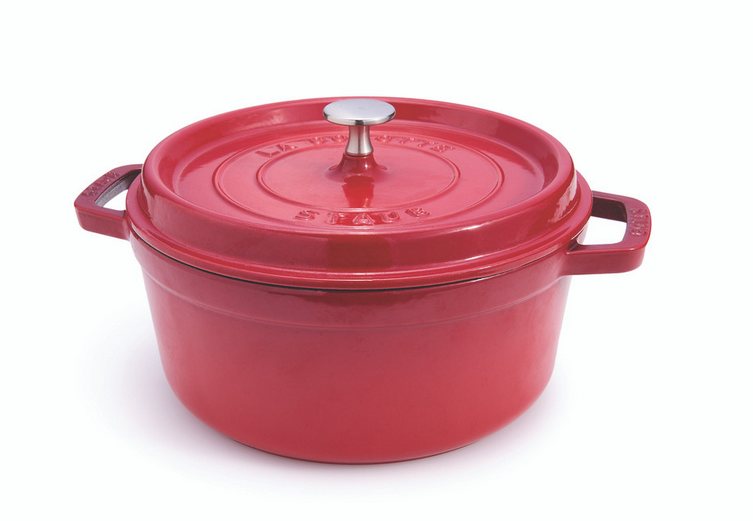
The lid traps much of the moisture in the loaf.
Carpe Diem.

