My search for grace and meaning after a former care partnering life with a wife who suffered from Parkinson's disease and dementia giving her a confused and disorienting world.
Open heart surgery – cracked open my chest – the whole thing – has come a long way since Mom had it many years ago.
I woke up about 9pm after surgery on Friday. The breathing specialist took the plastic tube out of my mouth and lungs. A little one, two, three and its out. Wow I am hoping to never have that experience again. There were four other drain tubes still in. two around my lungs, two around my heart. And to keep with the twos I had a double bypass.
I could talk so the first thing I did was call Debbie when the night nurse whose name was Austin gave me the phone it was great to hear her voice and I knew she would sleep better knowing that I was still my annoying self. I thought she would spread the word that Paul was back.
What a long slog this will be. The nurses and physical therapy folks – Emma and Amy – don’t leave you alone. The first day was simply sit in a hospital recliner chair until its too much. And they talked about keeping my elbows near my body, move in the tube is phrase that they use to help you remember. When they cut your pectoral muscles and your breast bone apart, your body tells you. There is that little pulling sensation in your chest that says – hey, hey, hey we are are healing down here – that will remind you to be careful.
On the Fifth day
What a remarkable feeling it is to sleep in one’s own bed. There is the added bonus of not getting poked in the arm somewhere at 3:15AM because they need another blood test. The chest x-rays at 5AM were also reduced to none at home.
I am truly amazed at my own progress.
I think I will stop here but God taught me two things; exercise is good for all recovery and do not ignore chest pain. I do have a greater appreciation of life.
Here is what happened…. about a week ago I road my bike about 6 miles or so on some great Monday weather in southwest Ohio. I felt an odd pain in my left breast that ran down my arm but to me at the time I thought – Oh you are straining that muscle you hurt last year. The pain went away after I stopped and rested a bit. That should have been a clue but it was not to me. On and off over the next few days it came back. I began to think that maybe I should get it checked out.
Debbie encouraged me to do just that and I made an appointment with my primary care person.
The ache in my left breast and trailer down my arm came back with a vengeance on Saturday while I was starting to put a porch glider together for Debbie. I still thought it was nothing and sat down for awhile and the pain subsided. (I just called it a pain. I did not do that then.) Debbie convinced me that it was not nothing and I should get it checked out.
We went to Jewish Hosp. and on Monday morning they did an angio-thingy to see what the problem was. I will interrupt my story a bit to mention that I was not in favor of visiting an ER on Saturday because no matter what, gray hair and chest discomfort – medical folks like that term instead of pain – will equal staying the night and the next day. I will admit that I should not be so cynical about that but it seems to be the way of our world and what the doctor found was worse that I thought.
I took up riding a bike again a few years ago. I did that a lot when I was younger.
When I retired from my engineering and service career I started walking a lot. Typically five miles or so for a typical trek around the neighborhood. We lived in a community that was perched on top of a ridge and I made a game of walking a long distance without going downhill. Over time I varied my walks to include parks and hills. When I saw my doctor for an annual checkup he said, “you’ve lost ten pounds!” instead of hello. The bike riding was a natural extension of that activity.
It got me through the first summer after Cheryl died. I was outside and in the sun.
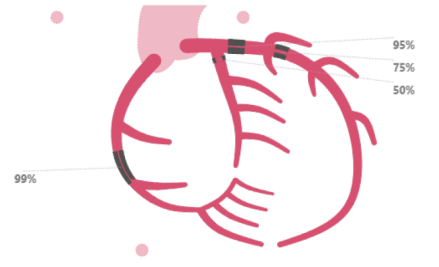
According to the surgeon the right coronary artery to my heart is 99% blocked and there is blockage elsewhere. (It is remarkable to me that I don’t have more pain. Now, for example I have none.) The report that I have from this procedure states that the left anterior descending artery is 95% blocked with a couple of the branches 75% and 50% blocked. Doctors like to write stenosis so the verbiage is stenosed.
Yesterday there were a bunch of tests to find the extra tubing and to determine where the calcified stenosis blockages are best detoured around to fix me. Something called a cardiac arterial bypass graft (cabbage) is in my future on Friday.
Wow I thought. I just do not feel that bad.
At this point I am just beginning to understand the value of having another caring person in your life, a person that is not afraid to say to you that you are wrong about some things, that person for me is Debbie. If she had not insisted that I get checked out I might still be at home wondering what that pain was and masking it with Tylenol or ibuprofen or both.
The moral here is if you are having twinges in your chest in your left breast and your left arm is following the dance in full romance get checked out. Or you might check out.
Debbie is with me through all of this. No doubt the universe is unfurling as it should.
Carpe the damn Diem but do not ignore what your body is saying.
This morning on the CBS news they reported on a piece about an association with drinking coffee and a resistance to dementia. Good News! Us coffee drinkers will not be demented – later in life? Ever? Only in our nineties? Oh wait. She said association. That term has a very specific meaning to statistical studies.
This study was based on the female participants in the Nurses’ Health Study (NHS; n = 86 606 with data from 1980-2023) and male participants from the Health Professionals Follow-up Study (HPFS; n = 45 215 with data from 1986-2023) who did not have cancer, Parkinson disease, or dementia at study entry (baseline) in the US.
You have got to love those numbers. Health care workers have been drinking coffee for forty-three years. And recording it.
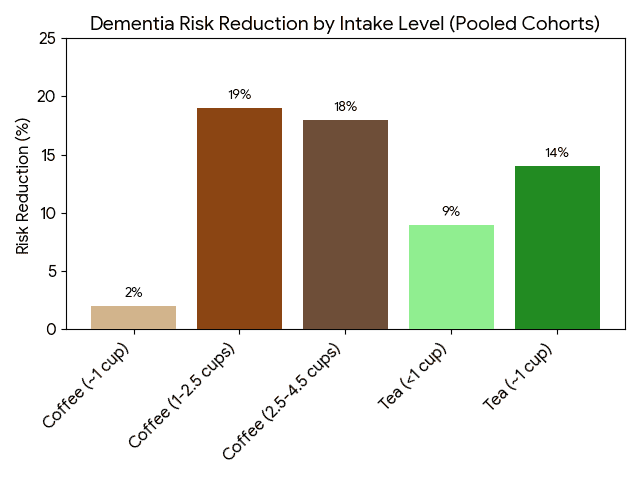
From JAMA — Conclusions and Relevance: Greater consumption of caffeinated coffee and tea was associated with lower risk of dementia and modestly better cognitive function, with the most pronounced association at moderate intake levels. (I want to say, “Hell yeah!” here.)
Association — Association refers to the general relationship and is normally used for studying relationship between two nominal/categorical/ordinal attributes;
Correlation — whereas correlation refers to a linear relationship between two quantitative attributes. It would not be out of context to mention here that the relationship between two quantitative variables can even be a nonlinear as well such as curvilinear or exponential.
Causation — Causation means that a change in one variable causes a change in another variable.
So, to conclude, not drinking coffee does not cause dementia. It might cause those sleepy “whaat?” looks that teens display in early morning classes but the WL study is incomplete at this time.
I am interested in statistical analysis. The math is attractive to me. I am deficient at recognizing patterns but I do recognize my wakefulness after coffee in the morning.
A shot of whiskey in the evening seems to aid in sleepiness at bedtime too.
I had a long conversation with a member of our Parkinson’s support group today. She called mostly to talk about her husband who has Parkinson’s disease (PD). And the struggles she was having as a caregiver with Parkinson’s disease care management. We talked for a long, long time. Maybe half hour, 45 minutes she was on the phone. She was pretty forthcoming, with lots of things that she was dealing within her life, I was surprised by the call and I don’t know why but I am glad she reached out and I was able to give her an ear. Afterward it made me feel good. It made me feel sad for her.
It made me think…
Think a lot about Cheryl and how I dealt with helping her deal with her disease. She had a lot of the same issues Bev was talking about. Her stories were remarkably similar to my memories of that time in our life. Bev is dealing with it (Parkinson’s in her husband) right now. With her husband her description is very, very similar to where Cheryl was maybe 2 years or so before the end of her life. The parallels are really striking. Bev was telling me that they moved into the condo that they are now living in about 5 years ago. (Same for us.) Mostly because it was getting harder and harder for her husband. He always, you know, mowed the lawn. And he did the maintenance kind of activities that you have with the house.
She went on and on to tell me lots of stories about things and I think I’ll have to think about them for a while. But the but the whole story line is so remarkably similar and so sad and well, maybe not sad, but but frustrating, you know, the disease just kind of consumes your whole relationship with with your spouse, they’ve been married a long time too.
They’ve been married about 35 years. They were together 3 or 4 years before that. Cheryl and I were married 53 years and we had been together for 4 years before that, it’s just incredible how similar the stories are.
Anyway, I needed to take time away from what I was doing here in my class management at the Mason campus of Sinclair College. I had to go have lunch somewhere where I could sit quietly and think about things and grade papers and take my mind off of that phone conversation and the memories it conjured. That was such a debilitating part of my life and Cheryl’s. It was so all-consuming. I think that’s what gets missed when people talk about care. Giving it is so all-consuming, slow moving, frustrating and then people will still say, “Well you’re blessed to have her or your blessed to have him. There’s no fucking blessed going on in that whole Parkinson’s/dementia thing.
Just.
Not.
Happening.
Bev did tell me one other useful thing. Her family doctor told her that she needs to go outside and take a walk everyday. No phones, no music, no nothing, you need to go out and listen to the birds, enjoy the sunshine. If there is no sunshine, enjoy the rain, if there is rain take an umbrella, but for 30 minutes a day, you got to just walk away from everything, get rid of the stress, let it go. That is absolutely the best advice I’ve ever heard anybody say to anybody else about this horrible disease of Parkinson’s. It truly is a horrible disease. I remarked to her that it was the best piece of advice I had ever heard. (I got away to ride my bike whenever I could.)
Not only does PD make it so that you can’t get around easily. It’s a brain disease, so lots of times the brain goes wacko. He or she becomes a whole different person. Bev was actually talking about that too.
She and I commiserated for a bit; they like us have been married a long time. All the early on things that they and we had. They had a really good life up until just a few years ago, when she thinks he really went downhill in a hurry. But that kind of story is just so common, and somehow doctors aren’t able to describe the signs to the care partner. It seems almost like you would need to have a psychiatric version of Parkinson’s doctor. PD is a movement disorder, so one seeks out a movement disorder specialist but probably one also needs a brain specialist or its psychiatric personality disorder specialist, in other words, a brain guy to to talk about some of these issues. The sad thing is the person with Parkinson’s disease doesn’t recognize what is actually going on. The person helping a person with a dementia issue, of course, is struggling to do the right thing to get the best care. Those around him or her (the family) without the lived experience, those that aren’t dealing with it on a day to day basis, they think that everything is generally okay, because the PD person the demented person is able to actually keep it together for an hour or 2 or whatever it takes to get through the party or the social activity, and so, those people, that part of the family who is not living there does not get to see the whole picture.
They think everything is fine or mostly fine.
Whoever it is, is obviously ill with PD and can’t move so good. Maybe they look old and got arthritis…
So many things are invisible. They cannot be seen. Or we choose to not see.
I suspect that few reading this will care much but I will tell you about it anyway. In a short little piece this morning on CBS, Tony talked about exercise and matching exercise to your personality. The researchers thought is that if you match your exercise to your personality trait(s) you are more likely to continue it whatever it is. In the Telegraph article that Tony was citing, they used the Big 5 model, a psychological framework, to find participants’ dominant personality traits.
I have been interested in psychology and personality for a long time. That interest was rekindled when I went for my M Ed. A few years ago. Hanging with Debbie has rekindled my interest again.
The Big Five model further divides each of the 5 into two as follows:
1) Conscientiousness – industriousness (a self-disciplined and efficient attitude) and orderliness (tidiness and a routine-based lifestyle). I make the bed every morning.
2) Extroversion – enthusiasm (friendly, sociable outlook) and assertiveness (an ambitious and socially dominant attitude) I greet total strangers with a smile.
3) Agreeableness – compassion (caring for and about others) and politeness. I care about how my kids are doing and I like to open the car door for Debbie.
4) Openness to experience – intellect (competence and quickness to understand) and general openness (a creative, imaginative and reflective outlook) Debbie and I have been to many different restaurants and are exploring various soft serve ice cream stands. We call them field trips.
5) Neuroticism – withdrawal (feeling discouraged and self-conscious) and volatility of mood. Sometimes in the afternoon I take a nap. Naps are healthy.
Two qualities, enthusiasm and positive thinking, in other words, scoring low on the withdrawal aspect of neuroticism were the key factors for happiness. The traits most strongly linked to numerous measures of well being include; life satisfaction, self-acceptance, and a sense of mastery and direction in life.
What’s this have to do with exercise? The study sample size was small. Less than 200 participated. In addition, only 70% or so of the initial group completed the follow up survey at the end. So proof! Any meaningful data dissipated rapidly but Tony talked about it anyway. His graphic showed a bicycle rider. The picture reminded me that it is my favorite exercise. I wondered if it fit my personality traits.
I became interested in this so I found the Frontiers in Psychology website and started looking for the article itself. I couldn’t really find the article but it was a very small study. I found this reference to it in the Guardian. I misheard Tony. It was a University College of London study of 132 folks who were invited to join in a survey. The article is humorous.
I still like to ride on the bike trail by myself. Others like to ride in groups. I listen to music or a book or a podcast or the birds while I ride along. I prefer the aloneness of riding. When I was caring for Cheryl it took me away from the heartache of that activity. The summer after she died, it took my heart to a different place much like meditation. This summer it is hot but it has developed into a hobby and an interest that simply gets me outdoors.
I do not think I am neurotic. (I hope the Guardian link works.)
Far be it from me to criticize the American appliance industry but I often wonder what jumped into the engineering head of folks who decided a toaster oven was a much needed appliance. Having a small oven is handy in its own way but why call it a toaster? Why temp us toast lovers with the ability to get warm morning toast when one actually gets the stale bread a week later.
Indeed toasted bread can be achieved in several different ways with one critical ingredient, great heat applied for a short or relatively short period of time. Toaster ovens are unable to do either. Generally they fit into the vast category of “Almost A Great Idea” or AAGI (aw-gee) for short. At one time in the past we owned a toaster oven which also had the ability to roast a chicken. It had a built in rotisserie gizmo to spear the chicken with and rotate through the meager heat source. (aw-gee) After much trial and error we determined that the timer needed to be able to set itself to much more than the 45 minutes on the dial. The heat source warm up is include in this time since it is not instant on. (Alas and aw-gee)
Many devices fit into AAGI. Instapots and Airfriers might be two more. But often it is fun and necessary to use a device with a small heat source that supplies invaluable cleaning expertise and practice.
Microwave ovens supply this valuable expertise as they are able to rapidly take water from liquid to gas in a rice-sized pocket spreading soup or any other suitable substance over the entire inner surface while keeping the rest of the bowl at the temperature of a standard refrigerator. They are remarkable devices. If you ever require rubberized eggs for any recipe, a low wattage microwave is just the perfect solution.
All of these thoughts came to over the past several days as I pondered another stale bread morning in my nephew’s beautiful, quaint and cute little bungalow in Port St. Joe, Florida. My sister and my girlfriend and I spent three wonderful days there this past week.
We drove in my car so we did not have the wonderful packing experience of making everything fit into one suitcase. We took our time. We stopped occasionally to look for best toilet facilities. We visited Bukee’s in Alabama. No soft serve ice cream at Bukee’s which is a sad state of affairs. (aw-gee) We stopped at the Shrimp Lady which claims to be restaurant-ish on Google Maps. It is not but we bought 2 pounds of shrimps as big as my thumb that came off the boat 20 – 30 minutes previously. Over the next couple of days we ate them as shrimp and cheesy grits, and shrimp with garlic, onion, green pepper and spaghetti with marinara and generous Parmesan cheese.
Did the two most important women in my life just bring me along to cook and drive the car? It was a great trip.
Back to the toaster oven. It is a fine device in its own way but entirely unsatisfactory for making toast in the morning. The Nespresso Virtuo, however, makes excellent coffee one cup at a time, every time, as long as the special pods and a water source are nearby. Foamy luxurious coffee.
We are back home in Ohio. The forsythia in the back is just opening itself. The daffodils are poking up and wondering what the forsythia can see that they cannot. The forest view through my window is greenish against the browns and grayness.
Daylight saving? Time is here. And as Debbie says, “the light is returning to the planet”
I am off to ponder a method of saving the daylight and fold the laundry from the trip.
This time of year many make resolutions for the new year. Me too, of course. My resolution to myself is to be a better me. And I have no idea what that means. Yet, the idea that I want to be a better me implies I know myself now and there are improvements that can be made for the better.
Do we ever really know ourselves? How old does one have to be before acceptance as is becomes the norm?
This past year as I passed through three quarters of a century and Cheryl did not, I began to emerge from a deep funk, a depression, the sadness of her death, the gladness of her death, half a decade of overwhelming anxiety about her care and looked toward an open road and at the new sunrise and wondered, what next?
A new person entered my life who knows me only as me, a man, single, a writer that exposes his emotions to the world, who tries to be of service to others around him, and maybe shares too much of himself. She does not seem to mind my nuances of self. Like everyone I have many of those nuances, sides, aspects. We seem to fit.
Another resolution, perhaps a better one is; stay in the moment. Being a better me is a look into the past and attempting to improve. Staying in the moment is not looking back. Nor is it planning for some future that may not come. For now fitting is enough.
These are thoughts that come to me as I think about a new relationship.
And whether or not it is clear to you, no doubt the universe is unfolding as it should. Therefore be at peace with God, whatever you conceive Him to be. And whatever your labors and aspirations, in the noisy confusion of life, keep peace in your soul. With all its sham, drudgery and broken dreams, it is still a beautiful world. Be cheerful. Strive to be happy. (Max Ehrmann)
This morning I restarted my morning chair yoga exercise routine. This morning I restarted morning meditation. Two things I notice: I have a pleasant gentle ache in various muscles from the stretching exercise, I did not hear the tinnitus in my ears while focused on breathing. These came to me as I sat across the room to revisit that short experience and my sense of time passing so slowly dissipated while I did these activities. My timer seemed to announce completion after a mere ten milliseconds instead of minutes from when I started it.
Time compressed. Where am I going? What am I hunting for?
Good health and peace in my soul is my spontaneous answer to the second question. Does going mean physically moving and travel to somewhere? Or is it internal? Some of each? Neither?
When Cheryl was still alive and with me here at home, I began to worry that my own health and well being suffered because I was totally focused on her health, what she ate, how much she ate, her mobility, her balance, her attention, her memories, her perception, her moods, her bowel urges. I rejected concern for myself.
Much of that concern then is useful for me now. Now I am focused on my health, what I eat, how much I eat, my mobility, my balance, my attention, my memories, my perception, my moods, my bowel urges. I think older folks focus too much on bowel urges. At the same time it seems important to note what foods that used to be favorites no longer seem to be tolerated as well as they once were.
When Cheryl was still here I began and kept up for many months an early morning routine of chair yoga. I bought a book. (I am always hunting for the manual.) I found the book back this morning after I finished my ten minute scheme to start. The exercises are simple and directions have illustrations. (YouTube has plenty of these but as soon as one gets into the zen, the calm, the mood, some extra-volume political message appears and phffst, just like that zen is destroyed. For an unreasonable sum, YouTube is ad free.)
Facebook shows me advertisements for an app with some 90-something guy with great abs doing chair exercises too. Those are amusing and laughable and less obnoxious and quieter. Welcome to the world of zen and social media.
I am not hunting for perfect abs. I remain uninterested in protein shakes.
I am interested in losing a little weight because my pants would be a bit looser. Most of that weight is hiding out on the front of me. I see it every day in the mirror.
I like meat. Meat has protein and tastes much better than a protein shake. Peanuts, nuts, eggs, oats, seeds and wheat have protein and all of those taste better than a protein shake. If it isn’t broccoli or celery, there is some protein in it. Broccoli has better taste than a protein shake.
Where am I going? That remains to be seen and felt. I strive to find a deeper meaning within myself.
For most of the spring and summer months I found something in pedaling my bike along the bike paths around town. I found an inner peace. I learned to focus over time on the piece of the trail immediately in front of me. I looked far ahead only to anticipate obstacles and plan maneuvers around them.
I returned to our church. Cheryl was much better at religion than I am. I am more questioning. I returned to church not for the religiosity. I returned for the community. I sit in a different place. (Everyone seems to have their place in a church.) Cheryl had a place that she liked to sit and of course I sat with her. I sit in a different place now. Just me.
I am going toward the next thing. That thing is right in front of me. It is not way out in the distance.
“Winter is coming”, says the head knight staffing the wall in Game of Thrones. It is indeed. Prepare for it. Dress for it. Do not be anxious. Anxiety serves no purpose.
Just wear this neck brace for a while and after 8 weeks or so all will be well. Hopefully after 8 weeks or so my face won’t look like it does now. Ill be back to my clean shaven, handsome self. Not looking like I went through the windshield of a car. Anyway It’s not too bad.
I still feel kind of dumb, but Oh well. Stuff happens.
The whole of the Parkinson experience is measured in tiny little steps. Whether it progresses or regresses the steps are tiny.
This morning for the first time in several mornings Cheryl awakened with an alertness that I have not seen for weeks. I helped her from the bed to the toilet and then she walked herself into the kitchen for breakfast. The previous few days I had rolled he into the kitchen in the transfer chair I purchased for watching grandchildren’s graduations. It was marvelous. She did not move rapidly but she was moving by her own power.
Is that progress or regress?
Which side of the fence are you on?
Progress?
Today, this morning, her disease regressed a bit and she got up after a long night of sleep refreshed and able to move herself around.






 Adjunct_Wizard