
The Parable of the Workers in the Vineyard (Matthew 20:1–16)
This story is one of my favorites in the New Testament. The landowner needs a bunch of pickers for his grapes. I think it does not matter but why did he not send his foreman to hire the workers? They were day laborers and for their trouble they earned a whole denarius according to some interpretations. This telling uses the phrase “usual daily wage.” Hiring is usually beneath the owner.
I have a different take on Jesus’s description of the first shall be last and the last will be first. I have rewritten a couple of my thoughts after the [OR] below the story that Matthew writes. It is not my intention to offend anyone. I tend to be slightly cynical when some one tells me how I should interpret words and stories. I become especially uninterested when someone tells me what wine goes with what food I have selected to eat. Unasked for advice is annoying to me.
I have always been able to read and interpret for myself. Certainly no one can taste the way I taste. I think avocados taste like green goo.
The Workers in the Vineyard.

1“The kingdom of heaven is like a landowner who went out at dawn to hire laborers for his vineyard. 2 After agreeing with them for the usual daily wage, he sent them into his vineyard. 3 Going out about nine o’clock, he saw others standing idle in the marketplace, 4 and he said to them, ‘You too go into my vineyard, and I will give you what is just.’ 5 So they went off. [And] he went out again around noon, and around three o’clock, and did likewise. 6 Going out about five o’clock, he found others standing around, and said to them, ‘Why do you stand here idle all day?’ 7 They answered, ‘Because no one has hired us.’ He said to them, ‘You too go into my vineyard.’ 8 a When it was evening the owner of the vineyard said to his foreman, ‘Summon the laborers and give them their pay, beginning with the last and ending with the first.’ 9 When those who had started about five o’clock came, each received the usual daily wage. 10 So when the first came, they thought that they would receive more, but each of them also got the usual wage. 11 And on receiving it they grumbled against the landowner, 12 saying, ‘These last ones worked only one hour, and you have made them equal to us, who bore the day’s burden and the heat.’ 13 He said to one of them in reply, ‘My friend, I am not cheating you. Did you not agree with me for the usual daily wage? 14 Take what is yours and go. What if I wish to give this last one the same as you? 15
[Or] am I not free to do as I wish with my own money? Are you envious because I am generous?’ 16 Thus, the last will be first, and the first will be last.”
[OR] – am I …Thus, the clever ones will hold out for a better deal. (but be aware one might not get hired.)
[OR] – am I …Thus, it is better to accept Jesus or join some Christian church just before death, one can still get into heaven. (The tricky part is knowing when one will die. Indulgences covered this, I think since those could be part of a Last Will.)
[OR] – am I …Thus, one man’s deal is unaffected by the deals of those around him. (Quit whining about what the other guy got.)
[OR] – am I …Thus, it is better to work in a situation where one’s labor rate is not public information. This will enable men to be paid much more for the same labor as women or other men that are unliked.
[OR] – am I …(add cynical interpretation here)
What AI thinks:
When I first wandered down this road and searched for an online text so that I did not have to practice my typing while reading my New American Bible, St. Joseph edition, I asked Google. The Google fully Accessorized Ignorance gave me these words –> This is the story about hiring laborers throughout the day and paying them equally, which focuses on God’s generosity and grace. [good so far]
— The Setup: Early in the morning (around 6:00 AM), a landowner hires day laborers to work in his vineyard and agrees to pay them the standard daily wage of one denarius. [since Matthew was written somewhere between 55 and 75 AD – a denarius was still a denarius.]
— The Hiring: Throughout the day—at 9:00 AM, noon, 3:00 PM, and even 5:00 PM (with only one hour of daylight left)—the owner goes back to the marketplace, sees people [lay-abouts?] standing around without work, and hires them too, promising to pay them “whatever is right.”
— The Ironic Ending: At the end of the day, the owner instructs his foreman to pay the workers starting with those hired last. [This use of a LIFO buffer is unexpected.] To their surprise, the 5:00 PM workers receive a full denarius. When the 6:00 AM workers are paid, they also receive a single denarius and immediately complain [Whiskey Tango Foxtrot] they think it is unfair since they worked all day in the scorching heat. [This is an AI guess. It might have been overcast or raining that day. This unsolicited opinion merely shows how inaccurate accessorized ignorance can be upon occasion.]
— The Meaning: The landowner reminds them that he kept his promise to pay them what they agreed upon, asking, “Are you envious because I am generous?” Jesus concludes with the famous teaching: “So the last will be first, and the first will be last.” It illustrates that God’s grace and salvation are gifts given equally, regardless of when someone comes to faith. [Also in other areas of life. Living is easier with grace and forgiveness than animosity and revenge.]
My mind got stuck on the Roman denarius and how did the Romans go from denarii to lira? Wikipedia which is written by many experts, is sometimes wrong but it is an excellent starting point. It contains articles written and corrected by the expert crowd. A reference list at the end gives one further information for follow up reading. [It is a great source of rabbit holes.]
What is a Denarius (in today’s money)?
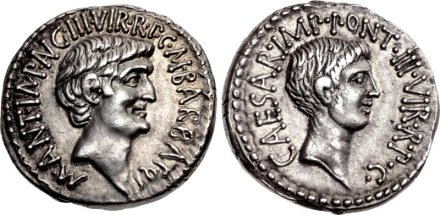
This from Wikipedia: “…Rome overhauled its coinage shortly before 211 BC, and introduced the denarius alongside a short-lived denomination called the victoriatus. The denarius contained an average of 4.5 grams of silver, or 1⁄72 of a Roman pound, and was at first tariffed [exchange rate] at ten asses, (Ah Ha!) hence its name, which means ‘tenner’. It formed the backbone of Roman currency throughout the Roman Republic and the early Empire. [Why the Romans were focused on asses is unknown today.]
The denarius began to undergo slow debasement toward the end of the republican period. [This whole republican/democrat thing has been around longer than one could imagine.] Under the rule of Augustus (27 BC – 14 AD) its weight fell to 3.9 grams (a theoretical weight of 1⁄84 of a Roman pound). It remained at nearly this weight until the time of Nero (AD 37–68), when it was reduced to 1⁄96 of a pound, or 3.4 grams. Debasement of the coin’s silver content continued after Nero. Later Roman emperors also reduced its weight to 3 grams in the late 3rd century.
The value at its introduction was 10 asses, giving the denarius its name, which translates as “containing ten”. In about 141 BC, it was re-tariffed [devalued or debased] at 16 asses, to reflect the decrease in weight of the as. [their asses got smaller or a greater number of asses were required to screw in a light bulb or the Roman equivalent of a light bulb] The denarius continued to be the main coin of the Roman Empire until it was replaced by the antoninianus [Antonini’s anus which was very small] in the early 3rd century AD. The coin was last issued, in bronze, under Aurelian between 270 and 275 AD, and in the first years of the reign of Diocletian. [By this time it held less value than the U. S. penny monetarily but … never mind]”
This Wikipedia article is long and fascinating and wanders through two thousand years of coins. Every few hundred years some king or emperor would say, “Enough of this. I need a team of eight horses to carry my purse!” And would declare a new standard.
From Google’s AI about the value of denarii in today’s bucks: There is no single fixed dollar amount for a Roman denarius because its value changed dramatically over 400 years and depends on how you measure it. Depending on whether you look at purchasing power, silver melt value, or collector prices, one denarius ranges from roughly $3 to over $50 (and up to hundreds of thousands for rare coins). [but a tiny amount if it is the crypto-coin. Denarius ($MXD): A BNB Smart Chain token trading around $0.00000222–$0.000004 USD]
Because the Roman Empire did not track modern economic metrics like inflation, historians and numismatists estimate its value in three distinct ways: (https://learn.apmex.com/learning-guide/coin-collecting/ancients/how-much-is-a-denarius-worth/)
1. By Historical Purchasing Power (~$20 to $100+)
— A Day’s Wage. During the Late Roman Republic and Early Empire (including the New Testament era), one denarius was the standard daily wage for an unskilled laborer or a common Roman soldier. Comparing that to modern daily wages puts its practical value roughly between $40 and $100+, depending on whether you benchmark against minimum wage or median earnings.
— Everyday Goods. In the Early Empire, a single denarius could buy several loaves of bread, a few pints of basic wine, or about half a modius (roughly 4 to 4.5 liters) of wheat in Rome.
— Later Debasement. By the 3rd century AD, emperors steadily reduced the coin’s silver content to fund the military, triggering massive inflation. By the mid-200s AD, a denarius was mostly bronze and held the purchasing power of modern pocket change (roughly $0.10 to $0.25).
2. By Silver Melt Value (~$3 to $10)
— Pure Silver Content. When introduced around 211 BC, a denarius weighed about 4.5 grams of 98% pure silver. By the time of Emperor Augustus and Tiberius, it weighed closer to 3.9 grams at roughly 97.5% purity.
— Raw Metal Worth. Based solely on the weight of its raw silver content—roughly 0.12 troy ounces—an early, high-purity denarius melts for around $3 to $10, fluctuating with the daily spot price of silver.
3. By Modern Collector Value ($50 to $720,000+)
More from AI. This chart really tells the tale.: … To convert a historical or biblical amount into modern purchasing power, economists typically use the labor-value benchmark. In the 1st-century Roman world, 1 denarius equaled one full day’s wage for an unskilled laborer or a common soldier. Because a “day’s wage” varies depending on what modern benchmark you use, here is a quick reference table showing how common biblical and Roman amounts translate into today’s dollars:
| Historical / Biblical Amount | Ancient Context | Modern Equivalent (at $60/day) | Modern Equivalent (at $100/day) |
| 1 Denarius | Standard daily wage for a day laborer (Matthew 20:2) | $60 | $100 |
| 2 Denarii | Paid by the Good Samaritan for an innkeeper’s care (Luke 10:35) | $120 | $200 |
| 30 Pieces of Silver | Judas’s betrayal price; typically 30 Tyrian shekels, equal to 120 denarii | $7,200 | $12,000 |
| 200 Denarii | Cost cited by Philip to feed the 5,000 (John 6:7) | $12,000 | $20,000 |
| 300 Denarii | Value of Mary’s jar of pure nard perfume (John 12:5) — Spikenard, also called nard, nardin, and muskroot, is a class of aromatic amber-colored essential oil derived from Nardostachys jatamansi, a flowering plant in the honeysuckle family which grows in the Himalayas of Nepal, China, and India. | $18,000 | $30,000 |
| 10,000 Talents | The massive debt in the Parable of the Unforgiving Servant | $3.6 Billion | $6 Billion (with a B) |
- Minimum Wage Baseline (~$60/day): Based on the U.S. federal minimum wage of $7.25/hour for an 8-hour shift. This closely mirrors the subsistence-level standard of living an ancient day laborer experienced.
- Living Wage Baseline (~$100/day): Reflects closer to $12.50/hour for an 8-hour shift. Many historians prefer a slightly higher benchmark to account for the relative purchasing power of food, shelter, and basic goods in the 1st century.
Wow. That was a deep rabbit hole.
Back to the parable
Thus, the last will be first, and the first will be last, could also be the reason so many church goers gravitate to the back of the auditorium. It does seem to fill in first. Oops, my cynicism crept in there.
“The last will be first and the first will be last” seems a stretch. It is a parable writer’s device. There is no good reason to pay the guys who started in the evening first. Could it have happened this way simply because often monetarily well off people want to stick it up the nose of those who are less so? Maybe, but this landowner, grape grower was generous with his wages. He kept hiring all day long.
He was also inefficient with his time. He kept going back to the store for more stuff.
Could it have happened this way because the landowner wanted to be lauded and celebrated by those he hired last? Those guys got picked last for the team and ultimately, they won. Has anyone been picked last as a child for a pick up game of whatever? Remember the feeling? Has anyone been picked in class when they did not have their hand up? Remember that feeling?
Why does envy and jealousy arise in the story from the morning hires rather than celebration of the afternoon hires good fortune? A little more cheer from the guys who had been there all day might encourage the late comers to buy the first round at the pub later. And they would have learned a valuable life lesson about holding out for a better deal rather than counting on the generosity of the landed gentry.
This same phrase popped up in our post Grief Share discussion yesterday from a person who became aware of Christianity later in life. Many of us spend life looking and hoping for justice rather than giving grace.
I do not think of heaven as being “like a landowner.” I think of heaven as a state of being, just not being here anymore.
Grace is a whole other topic.
Carpe Diem

