Thinking all the way back to high school, I have had a fascination with poetry of all sorts. I credit Fr. Averbeck and his English Literature class for this fascination. His love of Shakespeare and poetry came through when he taught. The school was re-organizing the scheduling for many classes and trying to fit as much as possible into the school day. Eng. Lit. was merely thirty minutes long. It was the best thirty minute block of time in my day.
Poetry invokes a picture which develops into an emotion and a feeling which awakens other senses. Smells erupt and colors appear as you let the words tell the story of the author has penned. The picture may be very different from the words. The picture may be very much like the words. Listen. You will see it.
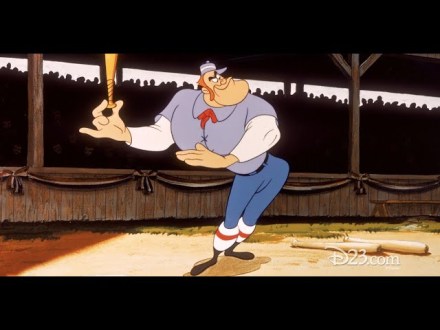
With Cheryl gone, I find myself reading more and reading poetry out loud. I am surprised sometimes at the involuntary emotion that sounds in my voice. I am not surprised at the memories that are awakened by various poems. This one – Casey at The Bat – is sort of corny, and yet, my voice always wavers and most times tears well up in my eyes. It takes me to a time when our youngest child had to memorize a poem in grade school. His intention was to find a short poem. I challenged him to commit to memory “Casey At The Bat”. I will learn it with you. It became a dinner time thing.
I would say, “The outlook wasn’t brilliant for the Mudville nine that day, the score stood four to two with but one inning more to play.” We traded lines back and forth. When he recited the poem in class for the rest of the students and his teacher, he told me one of his classmates asked him, “Did they win?” I laughed. He went on to tell me it was the longest poem anyone recited.
Those are good memories. It should not be surprising to me that tears of nostalgia appear in my eyes.
Casey at the Bat
By Ernest Lawrence Thayer
A Ballad of the Republic, Sung in the Year 1888

The outlook wasn’t brilliant for the Mudville nine that day;
The score stood four to two with but one inning more to play.
And then when Cooney died at first, and Barrows did the same,
A sickly silence fell upon the patrons of the game.

A straggling few got up to go in deep despair. The rest
Clung to that hope which springs eternal in the human breast;
They thought if only Casey could but get a whack at that—
We’d put up even money now with Casey at the bat.

But Flynn preceded Casey, as did also Jimmy Blake,
And the former was a lulu and the latter was a cake;
So upon that stricken multitude grim melancholy sat,
For there seemed but little chance of Casey’s getting to the bat.

But Flynn let drive a single, to the wonderment of all,
And Blake, the much despised, tore the cover off the ball;
And when the dust had lifted, and men saw what had occurred,
There was Jimmy safe at second and Flynn a-hugging third.

Then from 5,000 throats and more there rose a lusty yell;
It rumbled through the valley, it rattled in the dell;
It knocked upon the mountain and recoiled upon the flat,
For Casey, mighty Casey, was advancing to the bat.

There was ease in Casey’s manner as he stepped into his place;
There was pride in Casey’s bearing and a smile on Casey’s face.
And when, responding to the cheers, he lightly doffed his hat,
No stranger in the crowd could doubt ’twas Casey at the bat.

Ten thousand eyes were on him as he rubbed his hands with dirt;
Five thousand tongues applauded when he wiped them on his shirt.
Then while the writhing pitcher ground the ball into his hip,
Defiance gleamed in Casey’s eye, a sneer curled Casey’s lip.

And now the leather-covered sphere came hurtling through the air,
And Casey stood a-watching it in haughty grandeur there.
Close by the sturdy batsman the ball unheeded sped—
“That ain’t my style,” said Casey. “Strike one,” the umpire said.

From the benches, black with people, there went up a muffled roar,
Like the beating of the storm-waves on a stern and distant shore.
“Kill him! Kill the umpire!” shouted some one on the stand;
And it’s likely they’d have killed him had not Casey raised his hand.

With a smile of Christian charity great Casey’s visage shone;
He stilled the rising tumult; he bade the game go on;
He signaled to the pitcher, and once more the spheroid flew;
But Casey still ignored it, and the umpire said, “Strike two.”

“Fraud!” cried the maddened thousands, and echo answered fraud;
But one scornful look from Casey and the audience was awed.
They saw his face grow stern and cold, they saw his muscles strain,
And they knew that Casey wouldn’t let that ball go by again.

The sneer is gone from Casey’s lip, his teeth are clinched in hate;
He pounds with cruel violence his bat upon the plate.
And now the pitcher holds the ball, and now he lets it go,
And now the air is shattered by the force of Casey’s blow.

Oh, somewhere in this favored land the sun is shining bright;
The band is playing somewhere, and somewhere hearts are light,
And somewhere men are laughing, and somewhere children shout;
But there is no joy in Mudville—mighty Casey has struck out.

Copyright Credit: n/a
I love that poem. I can hear the crowd and smell hotdogs. But mostly I can see Scott as a young boy stretching his arms and growing into himself. This effort by Thayer is an ode and tells a story. Many poems that I read are more prayerful and and paint a much different picture and evoke a feeling of calm. Some can enrage. This one brings with it family time.
Carpe the Labor Diem



 Adjunct_Wizard