Longing for a Life

Some days when I look at family pictures I find myself longing for a different life. I long for a life without Parkinson. Often it is a deep deep longing on those days when Cheryl is struggling and I understand she is struggling and I have no ability to help without making her feel helpless. Her dementia pattern seems to inhibit her from asking for any assistance or realizing that she needs assistance whether it is me holding her up so that she can steady herself or simply handing her a tissue to blow her nose or blot her mouth when the drool comes.

Care partners run out of gas too. On most days her memory seems to work for about 10 minutes. ( That may be a sarcastic quip.) On others the loss of the discussion is much shorter than that. On those days I become frustrated which manifests as a louder whiny voice and sounds like anger. It sounds like anger even to me. Cheryl responds with anger and I suddenly remember where her mind is. It is very easy to forget she is still Cheryl. Repetition helps her know what to do or where to go or what she thinks she needs to do. Nevertheless it can be frustrating.

I started writing this short essay a couple days ago when I was feeling down? lost? tired of it all? – defeated? – maybe all of these. Sometimes I just wonder what if?

I doubt that anyone dealing with a partner in life that has a chronic disease wishes for their current existence. Endurance and strength to get through it all is all I ever hope for.

Looking back on the past few years, the covid shutdown, the covid start-back-up, the lifestyle/work style changes to society, the meanness of social media politics, I realize that Cheryl and I do not have it so bad. I wish her dementia to be gone but it is not – except for the few moments early after she awakens. She will look at me with tired eyes and smile. It lifts my heart and soul when that happens.

I still wonder “what if?” I just do not let it control me.

Breathe in, breathe out, move on. — Jimmy Buffet

GULF SHORES, AL – JULY 11: Musician Jimmy Buffett performs onstage at Jimmy Buffett & Friends: Live from the Gulf Coast, a concert presented by CMT at on the beach on July 11, 2010 in Gulf Shores, Alabama. (Photo by Rick Diamond/Getty Images for CMT)

Picture stolen from NPR.

Carpe Diem.

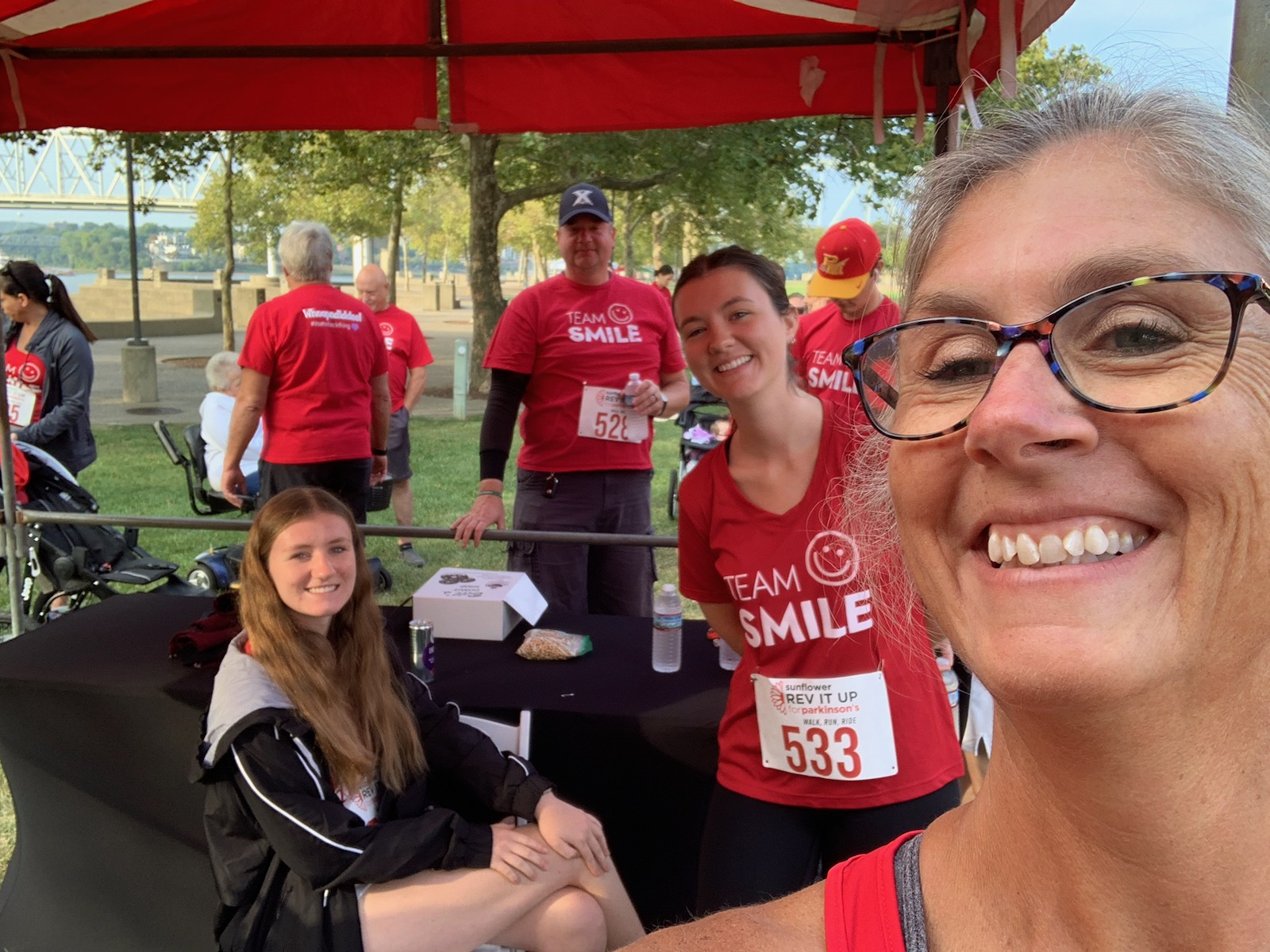
Sunflower Day!

It is the day of the Sunflower Rev it UP for Parkinson’s Walk/Run. Cheryl and I thank all who participated, donated and simply is there for Cheryl when she needs help.

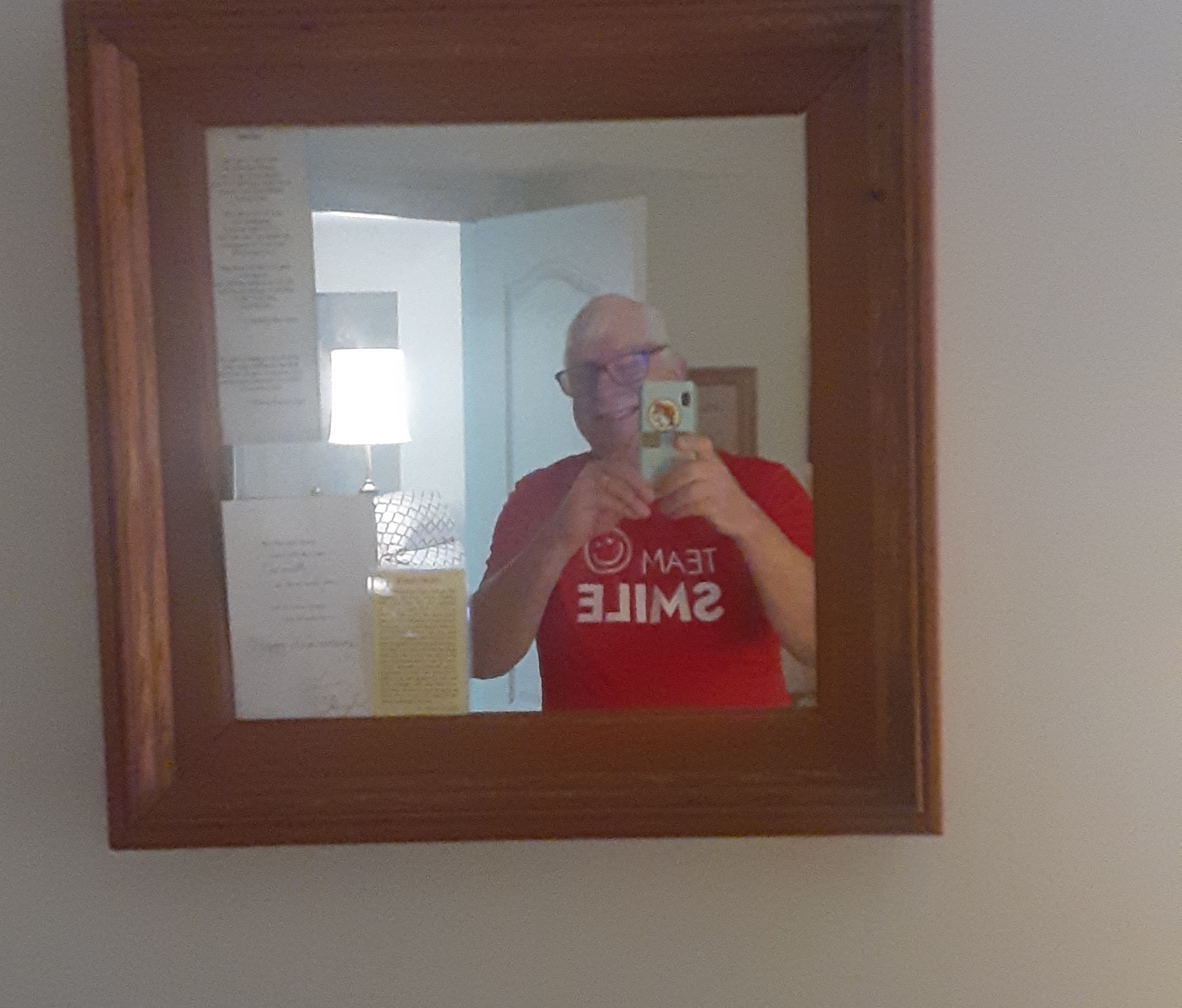
It is not too late to donate: https://secure.qgiv.com/event/2sriufpw/ — Cheryl’s team name is SMILE. Because “Mom always told us to smile.” And how can you not smile after saying whoopadidee!

This year was the first year that Cheryl and I did not get up early and head down to the riverfront. Alas as her disease progresses it is not to be on some days. This was one of those. Thanks to all who participated.

Carpe Diem!

Palliative Care

Today we saw the doctor whose clinic is concerned with palliative care. After a long discussion about drugs, symptoms and what the palliative care clinic does the conversation turned to what we hoped to achieve from it. My hope is for better existence for Cheryl. She has trouble vocalizing her hope.

From the National Institute on Aging — (NIOA) — the next couple paragraphs are useful general information. The doctor’s question hit me spiritually, what are we expecting? It is a good one — What are we expecting? A cure? Return of mental acuity? A better attitude about living with one’s plight? More mobility? A stronger core muscle strength? — A flood of thoughts entered my mind.


What is palliative care?

Palliative care is specialized medical care for people living with a serious illness, such as cancer or heart failure. Patients in palliative care may receive medical care for their symptoms, or palliative care, along with treatment intended to cure their serious illness. Palliative care is meant to enhance a person’s current care by focusing on quality of life for them and their family.

Who can benefit from palliative care?

Palliative care is a resource for anyone living with a serious illness, such as heart failurechronic obstructive pulmonary diseasecancerdementiaParkinson’s disease, and many others. Palliative care can be helpful at any stage of illness and is best provided soon after a person is diagnosed.

In addition to improving quality of life and helping with symptoms, palliative care can help patients understand their choices for medical treatment. The organized services available through palliative care may be helpful to any older person having a lot of general discomfort and disability very late in life.

Who makes up the palliative care team?

A palliative care team is made up of multiple different professionals that work with the patient, family, and the patient’s other doctors to provide medical, social, emotional, and practical support. The team is comprised of palliative care specialist doctors and nurses, and includes others such as social workers, nutritionists, and chaplains. A person’s team may vary based on their needs and level of care. To begin palliative care, a person’s health care provider may refer him or her to a palliative care specialist. If he or she doesn’t suggest it, the person can ask a health care provider for a referral.


Why (a conversation with myself, often) is palliative care necessary and useful? What benefit will come from this method of viewing Cheryl’s worsening Parkinson and her associated dementia issues? These are my thoughts.

Since the beginning of this road all I have wanted is for Cheryl to be safe, comfortable, mobile, and as independent as she is capable. Seven years ago, just before we purchased this condo that we live in now we lived in a neat old five bedroom, two story house with a basement. It was a hundred plus year old house with much space and character. Cheryl’s main complaint was her knees. At first I moved her office area downstairs to the front bedroom. We called it the guest bedroom and sometimes “your Mom’s bedroom.” I rearranged the use of the other extra bedrooms upstairs. I remodeled one and took over Cheryl’s old office upstairs as my own. The upstairs bathroom was accessed through the office. The home office was moved to the guest bedroom downstairs as was the rest of her equipment – sewing machine, computer things, printer, etc. but Cheryl had adopted the upstairs bathroom as her own and regardless of where she was maintaining a presence during the day she went upstairs if she required the facilities. (The hallway to our big bedroom in our condo she now refers to as upstairs or downstairs as her Parkinson and memory issues worsen.) She complained about her knees everyday until we moved to our flat single floor living arrangement.

During the seven year process of moving, adapting, adjusting I put her needs first not thinking about or recognizing what those adjustments would do to my emotional and physical health. Not once did I think about how my life would change when Cheryl gave up driving voluntarily when she could not remember where she was or where she was going. Nor did I realize that she was starting into her creeping memory issues. A couple months later when she became terribly upset and anxious one evening because she could not find $1.89 mistake in the check register that she was still computing by paper and pencil, I did not realize that she was struggling with cognitive issues in addition to memory issues. Her math and logical sequencing was gone or mostly so. She did not admit it to herself or to me and I did not recognize it. (notice – cognition in recognize) It was perhaps two years later that she was unable to follow recipe instructions or sewing pattern instructions. (I found myself reading how to reverse an item so that the seam allowance was hidden.) In retrospect she was probably terrified that she could no longer do those things. She was in fear of losing her mind and it caused anxiety.

My hope or expectation is that she will achieve some level of relief from her anxiety. My hope is that she will sleep more comfortably. My hope is that she will accept her disabilities that inhibit what she wants to do and she will ask for and accept help freely offered by her spouse (me).

My hope is that I will be more comfortable with letting her do for herself as much as she can while she can do it. Whatever it may be. My hope is that I will find the strength and the financial means to provide for her future care. My hope is that I will plan activities and be cognizant of the fact that plans will change without warning and I will not rage out loud when it does not go my way.

My hope is to be able to let go once in awhile for my own mental well being. I hope that this group of clinicians can help with living and life. But mostly I hope to get a good night’s sleep most nights.

Carpe Diem.

Today – Is it Christmas?

Yesterday evening when we went to bed she told me that today she wanted to put up the Christmas tree. My response was sure tomorrow is a good day for that. She slept undisturbed overnight.

Earlier after a breakfast of pancakes and fruit she told me that today she wants to put up the Christmas tree. We have a niece who has a party theme of “Christmas in July” around her newly rehabilitated back yard pool. (Jill lives five doors north of Sherlock Holmes. For those who read Sir Arthur you can deduce her address.) I have been keeping Cheryl apprised of the decorating progress as Jill has posted pictures on her Facebook Party page.

We went to Jill’s party last year. Of course we will go again this year. I will not remind Cheryl about her idea to put up the Christmas tree. I want to see if she remembers it for a longer period. (Overnight does not count. She often remembers her dreams from overnight.) And to be honest about it I do not want to put it up. Only I will be doing it and I have to rearrange furniture to do it.

So today I will live in terror of having to put up the Christmas tree. Or I could embrace it. The jury is still out.

Carpe Diem.

I Suppose it is True

One cannot be certain where the day is going when the person you care about most is dealing with Parkinson, memory loss and rapidly developing dementia. I have not spent much time away from Cheryl in my mind lately but Edie’s words made me think.

NEVER REGRET A DAY IN YOUR LIFE: GOOD DAYS GIVE HAPPINESS, BAD DAYS GIVE EXPERIENCE, WORST DAYS GIVE LESSONS, AND BEST DAYS GIVE MEMORIES.

— from Edie Kynard (a friend on Facebook)

The past few days are oddly jumbled up in my head. Yesterday we continued to track down Cheryl’s cousins-that-she-has-not-seen-for-awhile and had lunch. We picked up Lois and in keeping with our plan went to eat in a restaurant we had not been to before. Wild Mike’s it was called. Sort of a cross between a diner and a sports bar. In Cincinnati how you tell that is the place sells boneless chicken wings, real chicken wings, hoagies and hamburgers. It was a good time and we stopped in with Lois for an hour or so and Cheryl went through her family reunion book with Lois.

This afternoon two of Cheryl’s friends came to visit for awhile. I went to the barber for a much needed tune-up. I enjoyed the camaraderie of the barber shop that I have been going to for 50 years or so.

In the evening I made dinner in the oven as rain was predicted and I did not want to grill out in the wet. We ate on the back patio waiting for the rain that never did come. Cheryl pronounced it good and ate most of it. We did not argue. We enjoyed a random conversation about plants and rocks and things in the woodsy area behind our condo. She told me about some kids in the trees that I could not see. I asked her what they were doing. Just hanging there she said.

And today, although it was not best, is a good memory. Tomorrow she said as I helped her to bed – I want to put up the Christmas tree.

Carpe Diem

Cheryl likes Cookies

Today is Snicker Doodle Day again. These are simple sugar cookies. I added a new twist and put in a teaspoon of almond extract into the cookies dough. (Maybe two tsp. next time) I also added a tablespoon of psyllium husk power for added fiber. Parkies need as much fiber as they can get.

This basic recipe comes from the Betty Crocker Dinner for Two Cookbook. Cheryl has been making these cookies for 50+ years. Her face lights up when I make them.

Carpe Diem.

What are My Goals?

My sister said that maybe I should reevaluate my goals for Cheryl. I interpreted that as not specifically goals but what am willing and wanting to do for her care. Considering myself and my health in that same equation.

Hmm, lots to think about there. Recently I bought a new transfer chair to help me maneuver Cheryl around various places that I felt were too far for her to walk. My original thought was graduation and parties. We had some of those coming up.

It was a convenient method of transport so much so that I opted to take it to Florida on our little trip and not Cheryl’s super-walker from U-Step. In retrospect it was both a mistake and a smart move. I did take her “in house” walking frame. She had support at night and in our rental condo. A beach wheelchair was free for the asking we merely had to make a phone call to the life guards.

I pushed her across the street to get ice cream a couple times. that would have been a car trip if I had not had the transfer chair. — Convenient. Getting her into and out of the ladies handicap bathroom/stall — INConvenient. Live and learn mom used to say. We will keep using the transfer chair. It is how I get her out of bed to the toilet to the kitchen. It works great for that. I have not had any back issues. She does partially support herself.

I have started to think — actually I have for some time — I need to get my act together before I start helping her get her act together. In that instance I am not in a hurry for me and I can be calmer (I am still not good at that part.) at least while I am helping her. I have learned to anticipate her moves.

When we were at the neurologist earlier this week he asked if we would like to talk with a doctor associated with their practice that specializes in palliative care. We will see how this all plays out. Are we near the junction with another road?

Carpe Diem

A Little Surpising and Harrowing

Parkinson is full of surpises.

Many maybe all of these surprises are attached in some form to the various meds used to stave off the effects of the disease. Many of these surpises are not Parkinson at all.

Cheryl falls over upon occasion and those occasions seem to be increasing in frequency. She always falls backwards. Always is a strong adverb simply by being superlative. Every time I have witnessed her fall it has been backwards. When she gets up from a chair and I encourage her to lean forward to put her upper body weight over her toes (nose over toes) she will only do that for the first short motion of standing her next thought is to lean backwards while pushing on the chair. She is afraid to commit to the motion of standing. There is nothing I can do to help. I will ask her if I can help. her usual answer is “No I think I can do it.”

No-I-think-I-can-do-it often causes conflict. Two things tug against each other my unwillingness to allow her to suffer in silence is pitted against her unwillingness to recognize she needs help in some situations or her unwillingness to give in to the handicapping disease. That is one third of her physical surprises – balance issues.

The other two thirds are urinary and digestive issues. Urinary issues are mainly overnight incontinance and a constant fear of daytime incontinance. This last is exacerbated by the inability to easily stand from a chair and her unwillingness to ask for help when her bladder reports to her brain that it needs to be emptied immediately.

Digestive issues are both physical – constipation and indigestion and mental – as in making menu choices or answering “What would like for dinner, dear?”

Parkinson is a complicated disease and that is complicated by the many this-will-cure-you charlatans out there providing help to the parkies who need it and would desparately like to be cured. Many charlatans are not on-purpose charlatans (I am willing to give them the benefit of the doubt), they merely have strong beliefs in something that has worked for them. Parkinson is not hopeless by any sense but it is degenerative. It is complicated. It requires more than a PhD from the university of Google to solve.

Hopeful

Carpe Diem

It is Important to Listen

Research study questions are I opening (I know you think eye opening) but I meant I as in me. Before the pandemic pandemonium Cheryl agreed to participate in a longitudinal study on Parkinson’s disease.

There is an initial evaluation of mobility and mental agility. There is a blood test, urine test and stool sample test.

Much of the mental agility data collection effort is question and answer style. Several different instruments are used, one of which is the Beck Depression Inventory. As Cynthia (study tester) asked Cheryl the questions and marked her answers, Cheryl began to cry. Cynthia decided to skip the test. She did the same thing with the MOCA test. Cheryl could not draw a clock last time she took it.

As Cheryl was using the restroom I remarked to Cynthia that this might be the last time that Cheryl would be able to come and participate in Dr. Espay’s study. It was not that I thought she did not want to, rather, her mind is gone to the point that she may be of no help to them. Perhaps I should not impose on Cheryl’s desire to help others. A year from now she probably will not remember this visit.

The Beck instrument starts with questions such as:

1.
0 I do not feel sad.
1 I feel sad
2 I am sad all the time and I can’t snap out of it.
3 I am so sad and unhappy that I can’t stand it.
2.
0 I am not particularly discouraged about the future.
1 I feel discouraged about the future.
2 I feel I have nothing to look forward to.
3 I feel the future is hopeless and that things cannot improve.

… etc.

Cheryl teared up on question 2. In each question the participant selects the answer that they feel at the time. At the end a score is computed that evaluates the participant’s depression. Cheryl’s emotional level was strong on the second question and Cynthia stopped the instrument.

I had not realized how this disease was weighing on her emotions. As the disease progresses Cheryl needs more help physically. She relies more on me and others around her. She is very resistant to accept help from others constantly. She gave up driving long ago. A big part of her independence left her when she gave up driving.

It has proven to be a very emotional disease. Cheryl becomes angry with me when I help her “too much”. We have been together too long for me to ignore her needs. I help her anyway. She gets angry with me. I get angry with the disease and what it has stolen from us.

And then my heart melts.

Carpe Diem.

Bittersweet

THOUGHT FOR TODAY: The bitterest tears shed over graves are for words left unsaid and deeds left undone. -Harriet Beecher Stowe

This TFT came via Anu Arg’s newsletter to me this morning and when I read it two thoughts occurred to me. The first observation is yes but more importantly talk to the people you care most about and listen to them. The second observation is that I have been getting Anu’s newsletter since he started it in college about 1994-ish. Long ago and several email servers back. He and I share a love of words and their meaning both old and new. Today’s word is chirk. An old one that means cheerfulness. (Such a contrast to the TFT)

The Last Day

Today is our last day at the beach in Florida. Is it bittersweet? Tomorrow morning we will return home to our regular daily life (sweet). Am I reluctant to leave this Florida beach (bitter)? No I am not. It was/is however a nice change of pace.

Florida is hot. The humid air sticks to you like Luke Skywalker does to Mark Hamel. Fine white sand is everywhere. Tile floors although easy to maintain feel like a NHL practice rink just before the Zamboni comes out to a parkie unsteady on her feet. Those are a couple of the nuances that did not dissuade us from taking the opportunity to come here with Anna’s family. The experience was sweet. Going home will be sweet as well. No bitterness here.

Cheryl made it through all of the little inconveniences that come with being away from home and slightly off schedule for several days. Her schedule is very different from the rest of us and especially me. I suppose that I should be more cognizant of that but I am not. I am always hopeful that her disease interlaced with dementia will cure itself and we can move on with our life, run around and travel, drink fine wine, keep a schedule, make love again, just simply be. And that makes me forget where she is and where we are. Alas.

Red flag day

There is only sweetness coming when we get home. This vacation adventure with our daughter’s family has been hard on Cheryl but she does not seem to know it. She only knows that I am angry when she is doing something different than I am trying to get her to do. The page I have here about Dementia alludes to a lot of those little daily frustrations that I have observed. I should read it more often. Daily, perhaps?

… talk to the people you care most about and listen to them. Even when they are suffering with dementia and memory loss, she is still in there. Thanks, Anu. I often forget about that. The bitter can overwhelm the sweetness.

Carpe Diem.