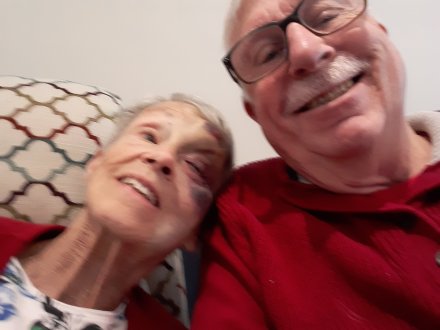
When I Visit Cheryl

When I visit Cheryl which happens everyday I notice things. Some of these are after I return home. I am not so concerned about where I put my shoes after I take them off for example. When Cheryl was here with me I was constantly concerned with trip hazards lying about in our condo. Occasionally we would argue about things like doormats and trow rugs, all of which I had removed from the condo over time as her ability to move and walk and balance became worse.

I notice how the staff interacts with the residents. They are generally kind and attentive. They are, I imagine, acutely aware of their own staffing levels.

I notice how the residents interact with the staff. Helen, another resident in the Harbor with Cheryl, is awake and alert and talkative today. Last night the Super Bowl went into overtime. It was not won until just before 11 PM, so, I imagine that several maybe most of the staff sat up and watched it until the end like I did. The difference being that I did not have to get up at 5 AM to make the 6:30 AM staff meeting. Some of the staff have that combination of Monday morning sleepy grumpy going on. I get that. I used to be a service/engineering manager. Mondays were often unnecessarily busy while we picked up all the stuff that fell on the floor over the weekend.

I notice the level of staffing. It is less so on the weekends as one might expect it to be. If there is one single area that I could suggest could be improved it would be weekend staffing. The world in general revolves around folks not working weekends without some sort of extra incentive which is often money. Rewarding altruism and empathetic caring for folks who cannot care for themselves is hard work for the administration and work life balance is strained when the work and life are similar. Conjuring useful rewards for weekend work like appealing to their sense of altruism is probably tough.

I notice the changes when the shift ends. The next group comes in. It is generally a smooth transition.

I hear the little discussions between the staff – what’s important to them.

I also find that if I am not the full time care partner I was when Cheryl was home with me I am able to have opinions about how others do the same task. I wonder about how I might do it differently. I keep those thoughts to myself. Juggling the needs of a dozen people at different stages of Alzheimer’s, Lewy body, Parkinson’s and other forms of dementia is more complicated than I had to deal with at home. My personal dilemma was remaining kind and thoughtful with lack of sleep but a lot of love. Love is sometimes hard to find if you are Mr. Lack-of-sleep-cranky-pants.

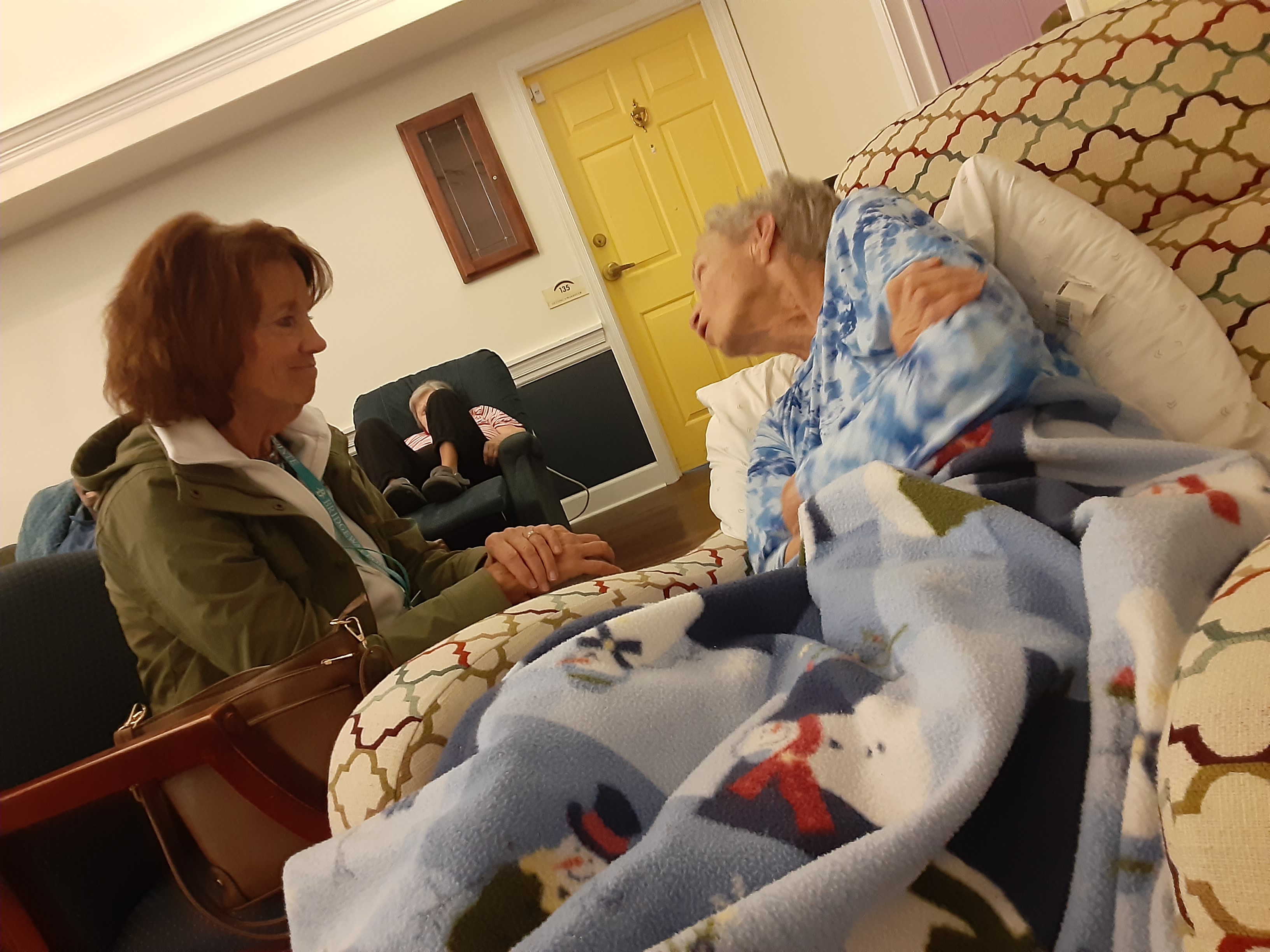
All of this wandered though my thoughts today as I visited with Cheryl and sat with her while she dozed in her chair. She was slightly awake but sitting with her eyes closed. She was uninterested in having company. I just held her hand for a bit and it seemed like she relaxed and fell into a nap. I miss her daily company.

Carpe Diem. ( Carpe Somnum when it is time.)

Dance Competition

A small gymnasium with loud music and time to wait, the pre-dance show is boring. I am glad that I have a book. I am writing facetious nonsense.There is no pre-dance show. It is loud music, unnecessarily so, in a small gymnasium.

The girls on all the teams are enthusiastic and passionate about their routines. As a biased grandfather watching these kids perform I think my granddaughter did the best but two concepts interfere with that assessment, familial relationship and ignorance of the judgment criteria. A rubric would be helpful with the latter. There is no help for the former.

I did enjoy the afternoon with my daughter’s family. Earlier in the day Cheryl had been sleeping soundly in her recliner. I sat with her for a time. She did stir when I talked to her. She did not stir when I kissed her cheek. She did not stir when pulled the blanket from beneath her head and covered her with it. She did not stir when I kissed her good-bye and left to have some lunch before the ride to the competition.

Jazz Dance

Cheryl was safe and taken care of. I went to watch the dancers without concerns for her wellbeing. I thought about how she would have liked to have been there. I made a video to show her later.

Cheer

Carpet Diem

A New Attitude

My brother-in-law’s wife recently had some surgery to her neck and over the past couple weeks we have exchanged text messages and visits. I ask how he is doing and how my sister-in-law is doing. Often I send him my latest picture of Cheryl at Bridgeway Pointe. Yesterday we had the following exchange.

  • Thanks for sharing. Tari still has lots of pain !!! I am tired and frustrated !!! How are You ?? — 2:36 PM
  • Not tired and frustrated. With little to do for Cheryl, I think lonely and broken hearted. Is Tari home or in rehab? How did that turn out? — 3 pm
  • Rehab did not go well. Tari is home now. Waiting to see about Home Health Care. — 4:29 pm
  • In home physical therapy sessions? — 4:30 pm
  • I guess. Not sure. –4:31 pm

I wrote lonely and brokenhearted to him. It was the first time I admitted that to anyone.

I get up in the morning and realize again that I have no particular schedule. Nothing that I have or want to accomplish this day. Three weeks ago my day was centered around Cheryl. I made very few specific plans for me that did not include her somehow. I focused on getting her going, up and out, onward and into the sunshine. In the Autumn months when it is still warm, just four weeks ago, I conjured little trips to the places where we used to walk. I did carryout from a little chicken place nearby sometimes and we had a picnic. Her in her rollie chair and me waving the bugs away. In September I had my picnic supplies in the trunk of the car so that we could do that spontaneously (Carpe Diem). My main goal for each day was simply to get her out into the sunshine somewhere.

A new attitude is my goal today and the rest of my days. I need to be less broken hearted. Lonesomeness I think I can deal with. That feeling will come and go. Cheryl is safe and well cared for at Bridgeway Pointe.

Carpe Diem. Cheryl is safe and well cared for at Bridgeway Pointe. (Repeat)

(Repeat)

It’s Near Time for Good-byes

I started this a couple days ago while sitting in the airport and elsewhere. I mulled over many thoughts that I had about family and siblings and care giving and end of life. A great visit with my sister and only sibling alive comes to a close.

Joyce asked me if I was shifting back into caregiver mode. I am. I also think that I never left that mode or mood. I was far away but the kids were close by for Cheryl. David took it upon himself to visit his mother every day. I was able to relax a bit.

In the collection of photos below in the picture immediately above the lighthouse there is a little white speck to the left of center in an otherwise empty ocean. That is a whale spout.

When I return we ( our family) will be planning, thinking carefully about future care for Cheryl. This was a test for us all. There are lots of imponderables. What is best for Cheryl? How will we finance it? How will we respond to her needs?

Carpe Diem.

Friday – A Weird One

It started like a normal morning I got up at 7:30 or so and left Cheryl sleeping soundly in bed. I put the last of yesterday’s coffee in a mug and told the microwave one minute. I woke up the Wordle on my tablet and went out to get the paper. Someone, perhaps our new neighbor brought them inside the front door. I picked up Jeanne’s paper and her mail. She is 98 and does not go out much or downstairs much. I carried her stuff up to the bag she hangs on her door for that purpose. I noted that she had not retrieved yesterday’s paper from her bag. (Maybe I will check on her later.)

I watched the news on hurry up speed up as I had prerecorded it when it came on at 7 AM. There is still a lot of things going on that I have no control over. But at our little group of condos, the decks are fixed, the roofs are on and the trim is newly painted. The landscape folks want me to accept the quote for scraping snow and putting out ice melter. Winter is coming.

I started thinking about Cheryl, winter, gloomy weather, sundown syndrome and care partner stuff. About 9:30 AM I went to see if she was awake and ready for breakfast.

I found her in that in between sleep and wakefulness that we all experience in the morning. Usually my right hip tells me (You are old buddy boy. Move your ass.) to get up and move around. Cheryl and I exchange small talk and teasing for a bit.

“Do you want a kiss on your ear?”, I say.

“No”, she replies.

“What about on this cheek?”

“Okay.”

“Scrambled eggs for breakfast?”

“Sure.”

“Toast with grape jelly?”

“Yes.”

“Want any bacon?”

“Not today.”

“I am going to get your rollie chair. I will be back.”

She is more comfortable these days with me scooting her out of bed and into a transfer chair. We go into the bathroom for a trip to the toilet, pills and then into the kitchen for breakfast.

On this day when I sat her on the toilet she began to shake, sweat and cry a little. “My arms really hurt.”, she said. She initially complained about the toilet seat being cold. I ignored that because she often makes that complaint. Her hands and arms were shaking violently and I held the glass and straw for her to take the meds that I placed in her mouth one by one. We have done this before but not with the shaking action.

I had been gently rubbing her left arm as I helped her take her pills and she asked me to stop. She told me her arms were hurting. I got her a nsaid pain reliever that had been prescribed by her doctor for occasional pain occurrences.

It is a little chilly in Ohio this morning and although our thermostat reads 75 F in the bathroom it seems even to me a little chilly. In the middle of moving her from the toilet to the transfer chair, I got her heavy fluffy ugly pink bathrobe on her. I combed her hair and rolled her to the kitchen.

Apple juice, scrambled eggs and jelly toast later, the shaking and sweating were gone. Her arms did not hurt anymore. She still reports a little pins and needles tingling in her hands and fingers. The meds seem to be working but this whole episode was new. It began after I had gotten her out of bed with no complaint and onto the toilet, also with no complaint.

A cold toilet seat seemed to start everything. And that is very weird. Maybe I need a couple of these snazzy covers.

Carpe Diem.

Sunflower Day!

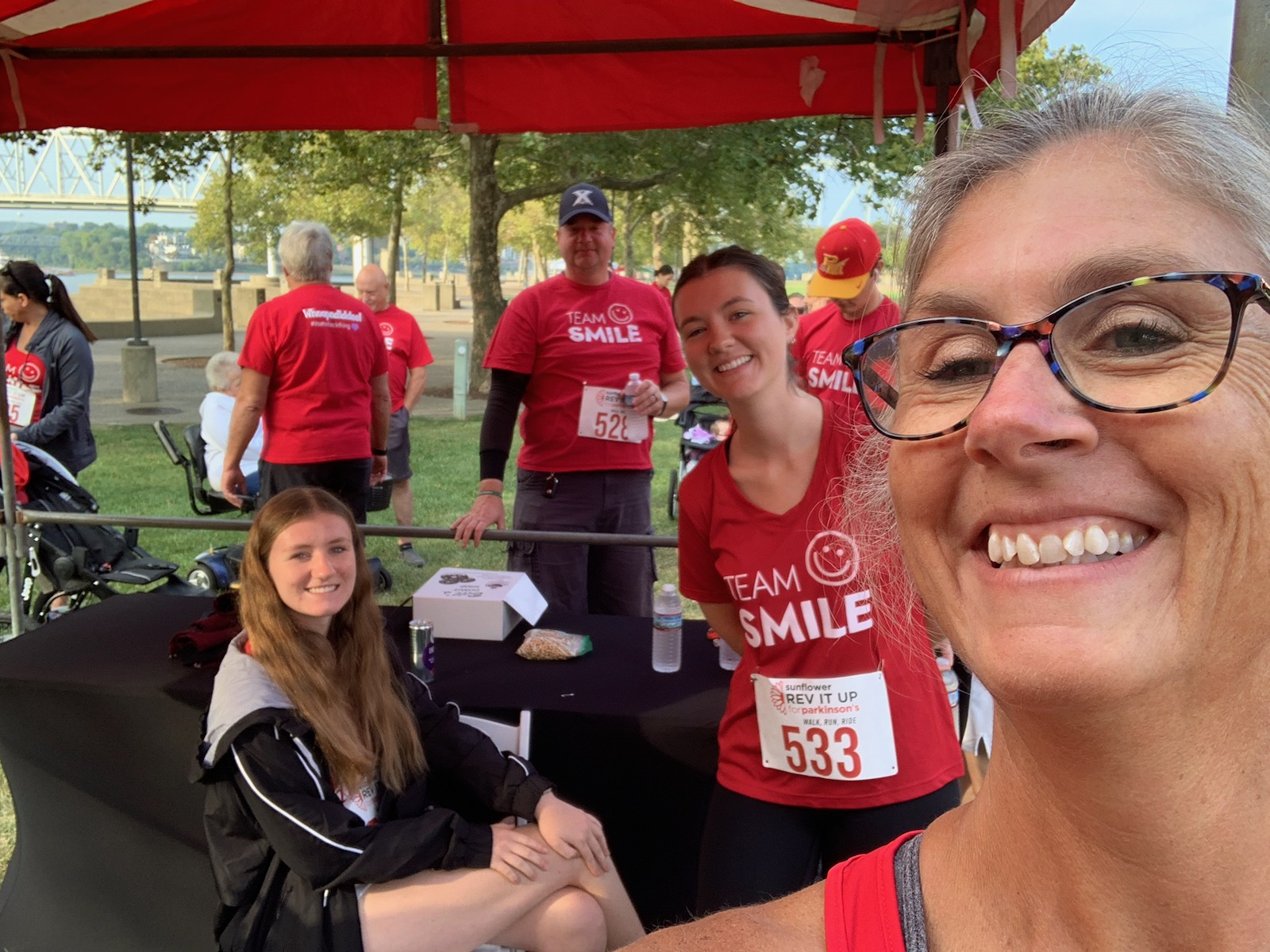
It is the day of the Sunflower Rev it UP for Parkinson’s Walk/Run. Cheryl and I thank all who participated, donated and simply is there for Cheryl when she needs help.

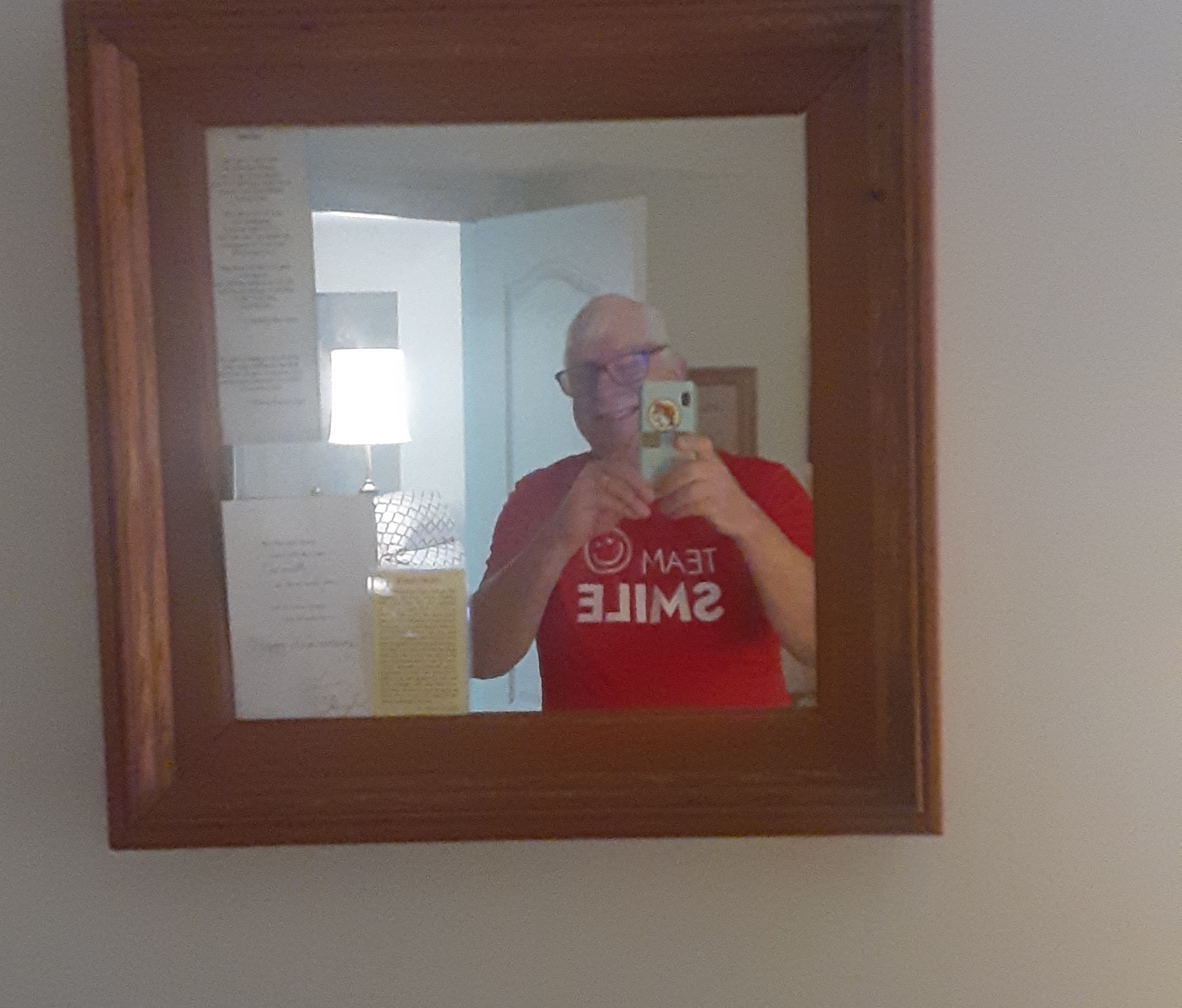
It is not too late to donate: https://secure.qgiv.com/event/2sriufpw/ — Cheryl’s team name is SMILE. Because “Mom always told us to smile.” And how can you not smile after saying whoopadidee!

This year was the first year that Cheryl and I did not get up early and head down to the riverfront. Alas as her disease progresses it is not to be on some days. This was one of those. Thanks to all who participated.

Carpe Diem!

I Expect Too Much

I do.

I expect Cheryl to do things that she is incapable of and respond with anger when she cannot. My anger is better described as frustration. As I leave her thinking she is headed in the right direction, when I check on her later, I find that she has wandered off in some new direction. Instead of washing her face, she is cleaning the sink.

I expect others or hope that others will see our dilemma and voluntarily help in some way. Those people who do are very few in number. They are a joy to be around.

I do not expect anything from strangers but they open doors or hold the door or jump up to open the door. It is a small thing but useful.

Friends and family are all helpful in their own way. They all have lives. They all have other interests. It is self centered of me to expect them to think about us.

As we travel this road of Parkinson and related dementia changing expectations is necessary. If you do not make adjustments all that can be found is perpetual disappointment.

Perpetual disappointment leads to cynicism. Conversation becomes sarcastic. The sarcasm is wasted on dementia patients. They will only detect the underlying anger.

Cheryl uses her left side successfully only when she concentrates. Perhaps specific marching encouragement will help – left foot, right foot, left foot, and on.

If I change my expectation for her walking, perhaps I can help her improve.

If I change my expectations of family and friends perhaps I can find more happiness and less disappointment.

Perhaps I need to change my expectations.

Carpe Diem.

Palliative Care

Today we saw the doctor whose clinic is concerned with palliative care. After a long discussion about drugs, symptoms and what the palliative care clinic does the conversation turned to what we hoped to achieve from it. My hope is for better existence for Cheryl. She has trouble vocalizing her hope.

From the National Institute on Aging — (NIOA) — the next couple paragraphs are useful general information. The doctor’s question hit me spiritually, what are we expecting? It is a good one — What are we expecting? A cure? Return of mental acuity? A better attitude about living with one’s plight? More mobility? A stronger core muscle strength? — A flood of thoughts entered my mind.


What is palliative care?

Palliative care is specialized medical care for people living with a serious illness, such as cancer or heart failure. Patients in palliative care may receive medical care for their symptoms, or palliative care, along with treatment intended to cure their serious illness. Palliative care is meant to enhance a person’s current care by focusing on quality of life for them and their family.

Who can benefit from palliative care?

Palliative care is a resource for anyone living with a serious illness, such as heart failurechronic obstructive pulmonary diseasecancerdementiaParkinson’s disease, and many others. Palliative care can be helpful at any stage of illness and is best provided soon after a person is diagnosed.

In addition to improving quality of life and helping with symptoms, palliative care can help patients understand their choices for medical treatment. The organized services available through palliative care may be helpful to any older person having a lot of general discomfort and disability very late in life.

Who makes up the palliative care team?

A palliative care team is made up of multiple different professionals that work with the patient, family, and the patient’s other doctors to provide medical, social, emotional, and practical support. The team is comprised of palliative care specialist doctors and nurses, and includes others such as social workers, nutritionists, and chaplains. A person’s team may vary based on their needs and level of care. To begin palliative care, a person’s health care provider may refer him or her to a palliative care specialist. If he or she doesn’t suggest it, the person can ask a health care provider for a referral.


Why (a conversation with myself, often) is palliative care necessary and useful? What benefit will come from this method of viewing Cheryl’s worsening Parkinson and her associated dementia issues? These are my thoughts.

Since the beginning of this road all I have wanted is for Cheryl to be safe, comfortable, mobile, and as independent as she is capable. Seven years ago, just before we purchased this condo that we live in now we lived in a neat old five bedroom, two story house with a basement. It was a hundred plus year old house with much space and character. Cheryl’s main complaint was her knees. At first I moved her office area downstairs to the front bedroom. We called it the guest bedroom and sometimes “your Mom’s bedroom.” I rearranged the use of the other extra bedrooms upstairs. I remodeled one and took over Cheryl’s old office upstairs as my own. The upstairs bathroom was accessed through the office. The home office was moved to the guest bedroom downstairs as was the rest of her equipment – sewing machine, computer things, printer, etc. but Cheryl had adopted the upstairs bathroom as her own and regardless of where she was maintaining a presence during the day she went upstairs if she required the facilities. (The hallway to our big bedroom in our condo she now refers to as upstairs or downstairs as her Parkinson and memory issues worsen.) She complained about her knees everyday until we moved to our flat single floor living arrangement.

During the seven year process of moving, adapting, adjusting I put her needs first not thinking about or recognizing what those adjustments would do to my emotional and physical health. Not once did I think about how my life would change when Cheryl gave up driving voluntarily when she could not remember where she was or where she was going. Nor did I realize that she was starting into her creeping memory issues. A couple months later when she became terribly upset and anxious one evening because she could not find $1.89 mistake in the check register that she was still computing by paper and pencil, I did not realize that she was struggling with cognitive issues in addition to memory issues. Her math and logical sequencing was gone or mostly so. She did not admit it to herself or to me and I did not recognize it. (notice – cognition in recognize) It was perhaps two years later that she was unable to follow recipe instructions or sewing pattern instructions. (I found myself reading how to reverse an item so that the seam allowance was hidden.) In retrospect she was probably terrified that she could no longer do those things. She was in fear of losing her mind and it caused anxiety.

My hope or expectation is that she will achieve some level of relief from her anxiety. My hope is that she will sleep more comfortably. My hope is that she will accept her disabilities that inhibit what she wants to do and she will ask for and accept help freely offered by her spouse (me).

My hope is that I will be more comfortable with letting her do for herself as much as she can while she can do it. Whatever it may be. My hope is that I will find the strength and the financial means to provide for her future care. My hope is that I will plan activities and be cognizant of the fact that plans will change without warning and I will not rage out loud when it does not go my way.

My hope is to be able to let go once in awhile for my own mental well being. I hope that this group of clinicians can help with living and life. But mostly I hope to get a good night’s sleep most nights.

Carpe Diem.

Occupational Therapy

Today we go to OT. Next week we see the speech therapist for the second time as is true for the physical therapist.

On Tuesday of this wek the speech therapist gave me as caregiver a homework assignment. I am to keep track of what Cheryl eats and whether she has a coughing fit while eating whatever it is.

Yesterday I wrote: She had scrambled eggs and bacon with toast and orange juice for breakfast. I aways put water on the table near her just in case. She did not cough (or hack) while eating any of this. Earlier when I gave her the morning meds she coughed a bit while sipping water through the container with a straw. This often happens but less so when I get her to sip a little water before she takes her meds.

She coughed not at all again until our late afternoon grill out on the patio. Again when she was sipping a little water.

I have to admit that I have paid little attention to how Cheryl eats. She eats more slowly than I do. I am a wolfer. She is not. She drinks very little liquid while eating.

Thinking back, her mother drank very little at supper time when we had her over. Her mother had a swallowing problem as she aged, often her throat worked bacwards for her. (She would become embarrassed and refuse any kind of help. I would take her home.) I wonder if Cheryl worries about this problem her mother had. I wonder if Cheryl worries that she might develope the same problem.

On this morning we had Pillsbury refrigerator rolls. These are a favorite of hers so I try to make sure we have some hanging around in the refigerator. She always has orange juice but this morning I also gave her some applesauce. She has been requesting this more when she takes her pills. After eating the applesauce and two and most of a third roll she complained of “nausea”. I do not know what she is actually feeling. She has not vomited since I went to visit my sister two years ago in California. (Then she was extremely constipated.)

She coughed for a bit and I gave her a chewable Tums smoothie with which she sipped a little water. All was well afterwards.

It is remarkable how little water she uses to take her meds. I encourage her to drink more water. It is remarkable how repetative it all is. It being daily life.

Carpe Diem.

I Suppose it is True

One cannot be certain where the day is going when the person you care about most is dealing with Parkinson, memory loss and rapidly developing dementia. I have not spent much time away from Cheryl in my mind lately but Edie’s words made me think.

NEVER REGRET A DAY IN YOUR LIFE: GOOD DAYS GIVE HAPPINESS, BAD DAYS GIVE EXPERIENCE, WORST DAYS GIVE LESSONS, AND BEST DAYS GIVE MEMORIES.

— from Edie Kynard (a friend on Facebook)

The past few days are oddly jumbled up in my head. Yesterday we continued to track down Cheryl’s cousins-that-she-has-not-seen-for-awhile and had lunch. We picked up Lois and in keeping with our plan went to eat in a restaurant we had not been to before. Wild Mike’s it was called. Sort of a cross between a diner and a sports bar. In Cincinnati how you tell that is the place sells boneless chicken wings, real chicken wings, hoagies and hamburgers. It was a good time and we stopped in with Lois for an hour or so and Cheryl went through her family reunion book with Lois.

This afternoon two of Cheryl’s friends came to visit for awhile. I went to the barber for a much needed tune-up. I enjoyed the camaraderie of the barber shop that I have been going to for 50 years or so.

In the evening I made dinner in the oven as rain was predicted and I did not want to grill out in the wet. We ate on the back patio waiting for the rain that never did come. Cheryl pronounced it good and ate most of it. We did not argue. We enjoyed a random conversation about plants and rocks and things in the woodsy area behind our condo. She told me about some kids in the trees that I could not see. I asked her what they were doing. Just hanging there she said.

And today, although it was not best, is a good memory. Tomorrow she said as I helped her to bed – I want to put up the Christmas tree.

Carpe Diem