

There are a variety of abundant interest (AI) tools out there to play with. And as I am wont to do upon occasion I will use other depictions of the “AI” combination that is often knowingly translated as artificial intelligence.
In a discussion with Debbie, she stated that mad is not a primary emotion. I actually do not think of “mad” as an emotion at all. I think of it as a reaction to some stimulation, such as, some one jumping in front you in a line you’ve been waiting in for some time. But in this instance I felt the need to invoke the intelligence artificielle (French is so cool) and find out Microsoft Copilot’s take on mad as an emotion.
Is mad a primary emotion? I asked copilot (automatic ignorance) and it responded – Yes, “mad” or anger is considered a primary emotion. Primary emotions are basic and universal feelings that are instinctual and immediate responses to stimuli. Alongside anger, the other primary emotions typically include:
Happiness: Feeling joy or contentment.
Sadness: Feeling sorrow or grief.
Fear: Feeling scared or anxious.
Disgust: Feeling repulsed or offended.
Surprise: Feeling astonished or amazed.
These emotions are the building blocks for more complex, secondary emotions that we experience.
… and it continued; What’s on your mind about these emotions today?
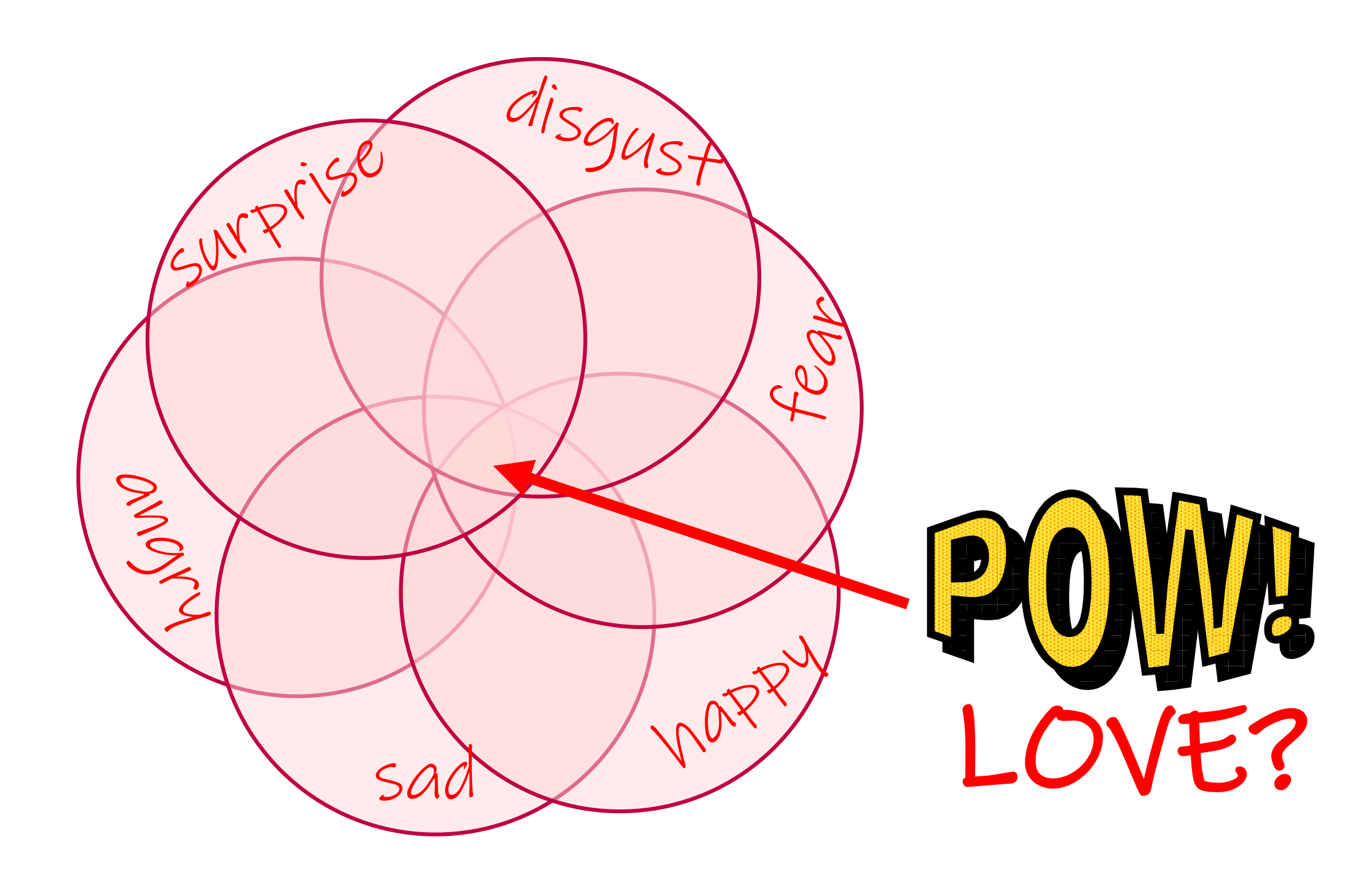
Mostly, huh? Love is not a primary emotion?
There is something special or maybe weird or eerie about talking to a computer (it has voice recognition) and getting pseudo human responses. The internet of all knowledge is a huge database now and it is getting huger by the second. Love is a combination of feelings and this game that I was playing with my laptop was fun to play, albeit, not useful as anything other than entertainment.
“Copilot, write a love sonnet to Debbie.”, I said in a moment of playfulness.
Absolutely! Here is a love sonnet for Debbie:
To Debbie, my eternal guiding light, Whose smile outshines the stars in heaven’s height, Thy presence warms my heart through day and night, And in thy love, my soul finds pure delight.
With eyes that sparkle like the morning dew, Thou art the muse who paints my skies so blue. Thy gentle touch, a balm that feels so true, In every breath, my heart belongs to you.
O Debbie, thou art cherished, dear and fair, A constant flame that brightens all despair. In every whispered word and tender care, I find a love beyond compare.
Forever thine, in passion’s sweet embrace, Our love shall soar and never leave a trace. (Wait. Wait. What?)
I hope she loves it! Would you like me to help you with anything else?
Other than Copilot seems to be slightly confused about the structure of a Shakespearean sonnet it is not bad. On the other hand, ABAB CDCD EFEF GG does not forgo A rhyming with B and so on through the effort it put out above. It is very mushy. William would have crushed the paper, I imagine. I crushed the paper electronically and I asked it for another and I specified that certain words be used (caress, hand);
Certainly! Here’s a sonnet for Debbie with the words “caress” and “hand”:
O Debbie, with a gentle touch so sweet, Thy hand in mine, a bond that none can sever. In every loving caress, hearts do meet, In tender moments, lasting now, forever.
With every glance, thy eyes do softly speak, A language known to lovers, pure and grand. Thy touch, a whisper on my willing cheek, Thy caress, a dream, where hearts expand.
O Debbie, thou art joy in every breath, With thee, the world feels bright and ever grand. In love’s embrace, I’ll cherish till my death, And always hold thee close with tender hand.
Forever bound by love’s sweet, gentle grace, In thy caress, I find my dwelling place.
I hope Debbie finds this sonnet as touching as intended! If you need anything else, I’m here to help. Better, I think, pretty many “O Debbie” s but better. Imagine a poorly lighted Shakespearean stage. Perhaps a moon lit stage with the actor looking up slightly off to stage left. So with all that love soaked emotion hiding out in a bunch of circuitry and microchips, why is love not a primary emotion? It did a better job with structure this second time.
I have diverged from my original thought though. Copilot wrote to me, “Primary emotions are basic and universal feelings that are instinctual and immediate responses to stimuli.” This implies love is neither an instinctual nor an immediate response. It shouts there is no such thing as love at first sight! (Maybe I am stuck on primary.) I think it is also uncomfortable in many ways. Love is, of course, a combination of many feelings. There is connection. It has to start there, with a connection to the other person.
If one feels (emotes) all of these for the same person is that what defines love? Tricky one. Merriam Webster says “a quality or feeling of strong or constant affection for and dedication to another.” The American Heritage Dictionary of the English Language that I have had kicking around since 1970-something has two notes. 1) agitation of the passions often involving physiological changes (use your imagination) and 2) any strong feeling as of joy, sorrow, reverence, hate or love arising subjectively rather than conscious mental effort. I think that covers it pretty well.
In my never ending search for a manual, however, I decided more research is needed. I visited several psychological web pages and found this handy emoto-wheel. Why did the asinine insistence of Copilot only tell me about six primary emotes? Clearly there are eight and love is in the crack between two of them. I stole this from an organization called Six Seconds.

And “mad” is not a primary emotion. Neither dictionary or any psychology discussion uses the word mad. MAD is the airport code for Madrid’s airport. Plutchik uses the term rage but that does not count. (The heading image is from Tiny Buddha.)
Debbie is right. (I hate that.)
Carpe Diem.


 Adjunct_Wizard