
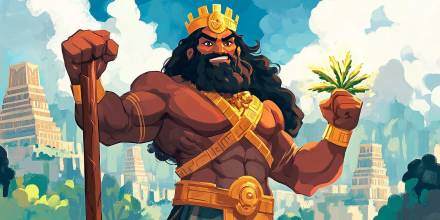
Various lines left from the past for us to understand today.
Reading the editor’s notes in poetry magazine, I noted that she made reference to Gilgamesh. In my technical education I was not exposed much if at all old and ancient writings. This fact became apparent to me when I walked into take the MAT test cold while I was working on my M Ed. Over the past twenty years or so if someone made reference to some old work or an author with which or whom I was unfamiliar, my inclination is to find that work or another work by the same author to familiarize myself with the style.
So it is with Gilgamesh. I found a volume on Amazon.
“The strongest of men will fall to fate if he has no judgment.”
This lesson (take away) from the story of Gilgamesh has been translated from a Babylonian clay tablet that was carved 900ish years BCE. This is I think the earliest known discussion of the death of common sense.
Reading about Gilgamesh who is two thirds god and one third man running around chasing down Enkidu who was living the good life like Tarzan or the roman twins brought to light the quoted comment from the gods shown above.
It is a cobbled up story about how Enkidu came to be. As it turns out, Gilgamesh was a stinker running around grabbing stuff even if he did not need it. That activity tends to use up all your kudos and the people get grumpy about it. Common folk started looking for a way to get rid of Gilgamesh so they can be in peace. They – the people – were feeling jilted and put upon. (Good king Wenceslas has run amok.) They talked to their god(s) who then talked to another group of designer gods who got the creator god on the phone. She, her name is Aruru, was told by the design team, you messed that up (Gilgamesh) so fix it.
Aruru invented Enkidu so that Gilgamesh (Gil) would have a playmate and leave the regular folks out of it. To make it seem plausible Gil had to do more conquerings. (We do a similar thing today. If you get assigned a drug that has (a) crappy side effect(s) there is also a drug to treat the side effect(s).) The story goes on to tell about various conquerings after Gilgamesh and Enkidu become mates and spend time doing the random conquerings. They do not spend much time thinking about the consequences of their conquerings. Eventually stuff turns to crap because the infrastructure is not being maintained. The flood happens. Etc.
The book of Genesis seems to be the same story with a few more begats in it and a little more specificity instead of leaving the story of everything up to a few random gods. The term god means starter person. In the beginning there had to have been starter people. Those early folks who through random chance developed the fire gene.
Once they developed fire, the world went rapidly crazy from there. Food tasted better. Drinks were better. Try making whiskey with cold water. Or try making bread without an oven. Smelting metals from ore is especially hard to do without fire, a really hot one. Wars became easier to fight with spears and swords and knives and arrows. It was easier to hunt when the war was on pause. Better longer lasting food led to affluence which led to opulence which led to pondering the universe and the why of it all. Steam was invented and that got rid of that annoying job of rowing and rigging the sails when not rowing. On and on it goes.
These days there is AI (arbitrary innocence, automated ignorance, artificial intelligence, you pick) which allegedly will either save us or kill us all and the grumpy folks are talking (still) to the gods. Where is Aruru?
The strongest of men will fall to fate if he has no judgment.
Throughout man’s existence the smart money has been on the guys who looked at all sides of some action before leaping into it with both feet. Fate in this instance is random happenstance. Planning is important. Even with all the planning fate can jump up and bite you in the left cheek while you are moving by it.
Maybe it is true. Stories must be told and retold over and over and again and again.
Carpe Diem.
 Adjunct_Wizard